

Rooftop Pool Dubai: Design, Types and What It Takes to Build One
From rooftop infinity pools overlooking the skyline to compact plunge pools on a villa terrace, here is what actually goes into a rooftop swimming pool in Dubai, and where it can and cannot be built.
A rooftop pool in Dubai is a swimming pool built on top of a building rather than at ground level, most often found in apartment towers, hotels and select villas with usable upper floor terraces. Because of the added height and structural weight involved, every rooftop pool needs its own structural, waterproofing and access assessment before design work can even start. Rooftop pools have become one of the most requested pool types across Downtown Dubai, Dubai Marina, Business Bay and Palm Jumeirah, largely because they turn unused roof space into a private pool with a skyline or waterfront view that a ground level pool could never offer.
What Makes a Rooftop Pool Different From a Ground Level Pool
A rooftop swimming pool is not simply a normal pool moved up several floors. Every part of the design starts from a different question than a villa or ground level project would ask. Instead of beginning with shape and finish, a rooftop pool begins with a structural question: can the building's existing columns and slab actually carry the weight of a filled pool at that height.
A filled pool weighs roughly one tonne per cubic metre of water, before adding the weight of the concrete shell, tiling, coping and surrounding deck. On a villa, the ground simply absorbs that load. On a rooftop, the load has to travel down through the building's own structure, which was often not designed with a pool in mind unless the building was planned around one from the start. This is why a structural engineer's assessment always comes before any design conversation about shape, size or finish.
Access and logistics are the second major difference. Materials for a rooftop swimming pool, including concrete, waterproofing membrane, tiling and plumbing components, need to travel up through a building's service elevator or by crane, depending on what the building allows. This has to be coordinated with building management well ahead of time, since an uncoordinated delivery schedule is one of the most common causes of delay on rooftop projects across Dubai.
Why Rooftop Pools Have Become So Popular in Dubai
Dubai's skyline is part of the appeal of living or staying here, and a rooftop pool is one of the few features that puts that skyline directly into your everyday view rather than something you look at from a distance. In a city built largely on high rise towers, ground floor garden space is limited or shared, which pushes both residential and hospitality projects to look upward instead of outward for their outdoor amenity space.
This is especially visible in the Dubai hotel rooftop pool scene, where an infinity edge overlooking Downtown Dubai or Dubai Marina has become almost a standard expectation for anything positioned as a luxury property. A rooftop swimming pool with a genuine view does more than provide a place to swim. It becomes the single most photographed and most remembered feature of a stay or a residence, which is exactly why so many towers and boutique hotels across the city have prioritised rooftop pool space in their design.
For private villa owners with an elevated terrace, the motivation is similar on a smaller scale: a rooftop or elevated pool turns an otherwise unused flat roof area into usable, high value outdoor living space without needing extra land.
Types of Rooftop Pools in Dubai
Not every rooftop pool looks the same, and the right type depends on the size of the terrace, the view available and how the space will actually be used.
Rooftop Infinity Pool
The most requested rooftop pool type in Dubai. A rooftop infinity pool uses a weir wall and balance tank to create the effect of water disappearing into the skyline or horizon. It needs an open, unobstructed view on at least one side and precise structural work at the edge, but the visual result is what most people picture when they think of a rooftop infinity pool Dubai project.
Rooftop Lap Pool
A narrow, linear pool suited to fitness focused residents or hotel gyms with limited rooftop space. It prioritises length over width, giving a real swim in a footprint that a full sized pool could not fit into on a smaller terrace.
Rooftop Plunge Pool
A compact pool designed for cooling off rather than swimming laps. Plunge pools suit smaller terraces where a full rooftop swimming pool is not structurally or spatially possible, while still delivering the rooftop pool experience.
Heated Rooftop Pool
Heating extends usability into Dubai's cooler winter evenings, which matters more on an exposed rooftop than at ground level, since wind exposure can make rooftop water feel cooler than a sheltered garden pool at the same temperature.
Best Areas in Dubai for a Rooftop Pool
Where a rooftop pool works best comes down to view, building height and structural potential. A handful of areas across the city consistently offer the strongest combination of these factors, which is why they account for most of the rooftop swimming pool projects and best rooftop pools Dubai is known for.
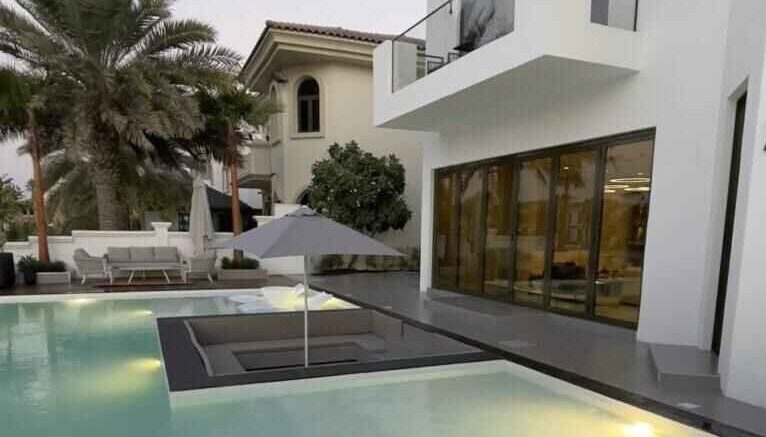
Suitability always comes back to the individual building or plot rather than the area alone. A tower in Downtown Dubai with strong structural reserve capacity will support a rooftop infinity pool far more easily than an older building in the same neighbourhood, which is why a site specific structural assessment always comes before committing to a design.
Structural and Engineering Considerations
The engineering behind a rooftop swimming pool is what separates a pool that lasts decades from one that causes problems within a few years. Several factors need to be assessed together rather than in isolation.
Load Capacity
Before anything else, a structural engineer reviews the building's existing drawings to confirm live load capacity at the proposed pool location. This often means the pool ends up positioned over load bearing columns rather than in the centre of open slab space, which shapes the layout of the entire project more than aesthetic preference does.
Waterproofing
A leak in a ground level pool is a maintenance issue. A leak in a rooftop pool is a risk to every floor beneath it. Rooftop waterproofing uses a multi layer membrane system that gets tested thoroughly before any tiling begins, treating it as the single most critical phase of construction rather than a coating applied at the end.
Drainage
Splash out and rainwater around a rooftop pool deck need to be directed away from the building facade and away from any unit below, which has to be planned into the deck grading from the earliest design stage rather than added afterward.
Wind Load
At height, wind becomes a real design factor for railings, glass balustrades and any pergola or shading structure around the pool. These elements are specified for rooftop wind conditions rather than ground level assumptions, and safety railings around a rooftop edge are subject to their own building code requirements separate from standard pool fencing rules.
MEP Routing
Filtration pumps, heating equipment and electrical connections usually need to tie into the building's existing mechanical, electrical and plumbing risers rather than running entirely new services from ground level, which is coordinated with the building's facilities team early in the process.
Design Elements That Define a Great Rooftop Pool
Beyond the engineering, a handful of design choices consistently separate a memorable rooftop pool from an ordinary one.
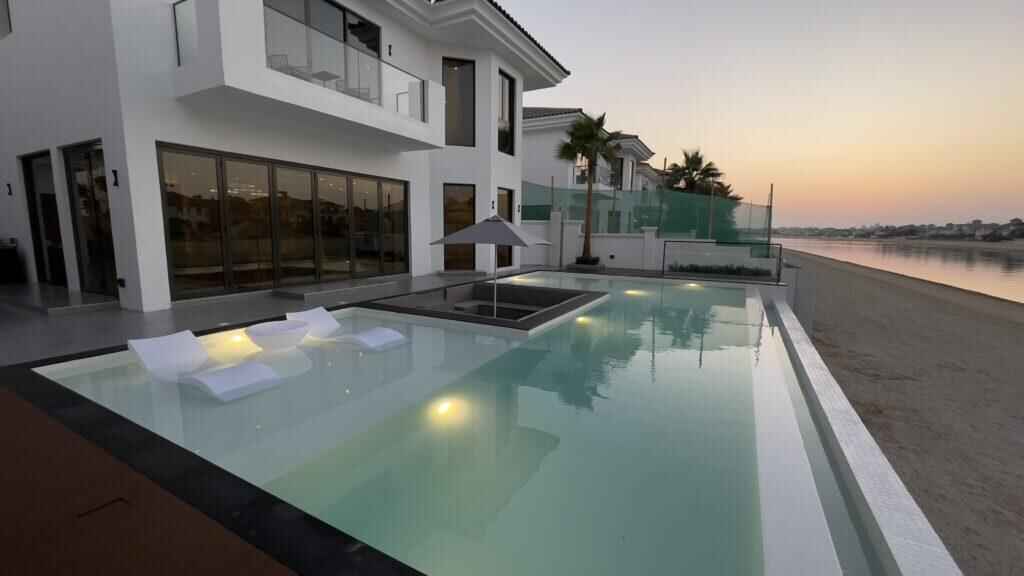
- Glass edge walls. A glass panel along one side of the pool keeps the view uninterrupted even where a full infinity edge is not structurally possible.
- Dark tile finishes. Charcoal or deep blue grey tiling reduces glare and strengthens the visual effect of water blending into the skyline or horizon, particularly for a rooftop infinity pool Dubai project facing an open view.
- Ambient lighting. Underwater and deck lighting extends the pool's usability and appeal into the evening, which matters more on a rooftop where the skyline view is often best after sunset.
- Wind conscious seating and planting. Loungers, cabanas and planting are positioned and anchored with rooftop wind exposure in mind, not arranged the way they would be in a sheltered garden.
- Privacy screening. Glass or planted screening manages sightlines from neighbouring buildings without blocking the pool's own view outward.
Maintaining a Rooftop Pool in Dubai's Climate
Rooftop pools face more direct sun, wind and dust exposure than a sheltered ground level pool, which changes how they are maintained day to day. Wind exposure increases evaporation rate and blows more debris into the water, so filtration often needs to run longer or more frequently than an equivalent ground pool would require.
Filtration equipment on a rooftop is typically housed in weatherproof enclosures given the direct exposure to sun and rain, and this equipment is checked more regularly as part of a maintenance schedule than ground based systems tucked away in a plant room. Chemical balancing follows the same core principles as any Dubai pool, but the faster evaporation on an exposed rooftop can shift chlorine and pH levels more quickly, which is worth factoring into how often a rooftop pool gets tested.
Approvals Needed for a Rooftop Pool
Every rooftop pool in Dubai needs Dubai Municipality approval, the same as a ground level pool. On top of that, a rooftop pool in a shared building typically needs sign off from building management before construction can start, and depending on the building's classification, civil defence approval may also apply given the pool's position above other occupied floors.
Coordinating these approvals early, alongside the structural assessment, is usually what determines whether a rooftop pool project runs smoothly or gets delayed months into construction.
From Concept to Construction
A rooftop pool project typically moves through structural assessment, design and 3D visualisation, Dubai Municipality and building management approval, then construction itself, which includes access coordination, waterproofing, plumbing and electrical work tied into the building's existing systems, and finally tiling, testing and handover. Because of the additional approvals and access planning involved, a rooftop pool generally takes longer than an equivalent villa pool of the same size.
Hello Landscaping & Pools LLC handles the full rooftop pool construction process in Dubai, from the initial structural conversation through to a finished, tested pool. For a full breakdown of how a rooftop pool gets built, visit our Rooftop Pool Construction service page.
Thinking About a Rooftop Pool?
Tell us your building, terrace size or plot, and we will tell you honestly what is structurally possible before anything else.
Frequently Asked Questions
Common questions about rooftop pools in Dubai.
A rooftop pool is a swimming pool built on the roof or an elevated terrace of a building rather than at ground level. In Dubai, rooftop pools are common in apartment towers, hotels and select villas with usable upper floor terraces, and they need their own structural and waterproofing assessment before design can begin.
It depends entirely on the building's structural design. A filled pool weighs roughly one tonne per cubic metre of water plus the weight of the shell, tiling and surrounding deck, so a structural engineer needs to confirm the roof or slab's live load capacity before a rooftop pool is planned.
Yes, when designed correctly. Railings, glass balustrades and any pergola or shading structure around a rooftop pool are specified for rooftop wind conditions rather than ground level assumptions, and this is factored into the design from the start.
Not automatically. A rooftop infinity pool needs an open view or an edge with nothing directly obstructing the sightline, along with structural capacity to support the weir wall and balance tank system that creates the infinity effect. A site assessment confirms whether a building or terrace suits this design.
Rooftop pools are more exposed to wind, dust and direct sun, which can increase evaporation and debris compared to a sheltered ground level pool. Filtration equipment on a rooftop often needs weatherproof housing, and drainage has to be designed so splash out never reaches the building facade or units below.
Yes. In addition to Dubai Municipality approval, rooftop pools in shared buildings typically require sign off from building management and, depending on the building's classification, civil defence.
Downtown Dubai, Dubai Marina, Business Bay, Jumeirah Beach Residence and Palm Jumeirah all offer strong rooftop pool potential thanks to skyline, marina or waterfront views, though suitability always depends on the specific building's structure and terrace layout.
Rooftop pools generally take longer than an equivalent villa pool because of structural review, access coordination and additional approvals, so the timeline is usually assessed on a project by project basis after the initial structural check.