

Swimming Pool Retiling in Dubai
Cracked tiles, dull grout lines and a waterline band that's lost its shine are usually the first visible sign that a pool needs attention. Our swimming pool retiling service in Dubai replaces damaged or worn tiling with mosaic, glass or natural stone finishes, backed by proper waterproofing underneath — not just a cosmetic fix on top of an old problem.
What Pool Retiling Actually Involves
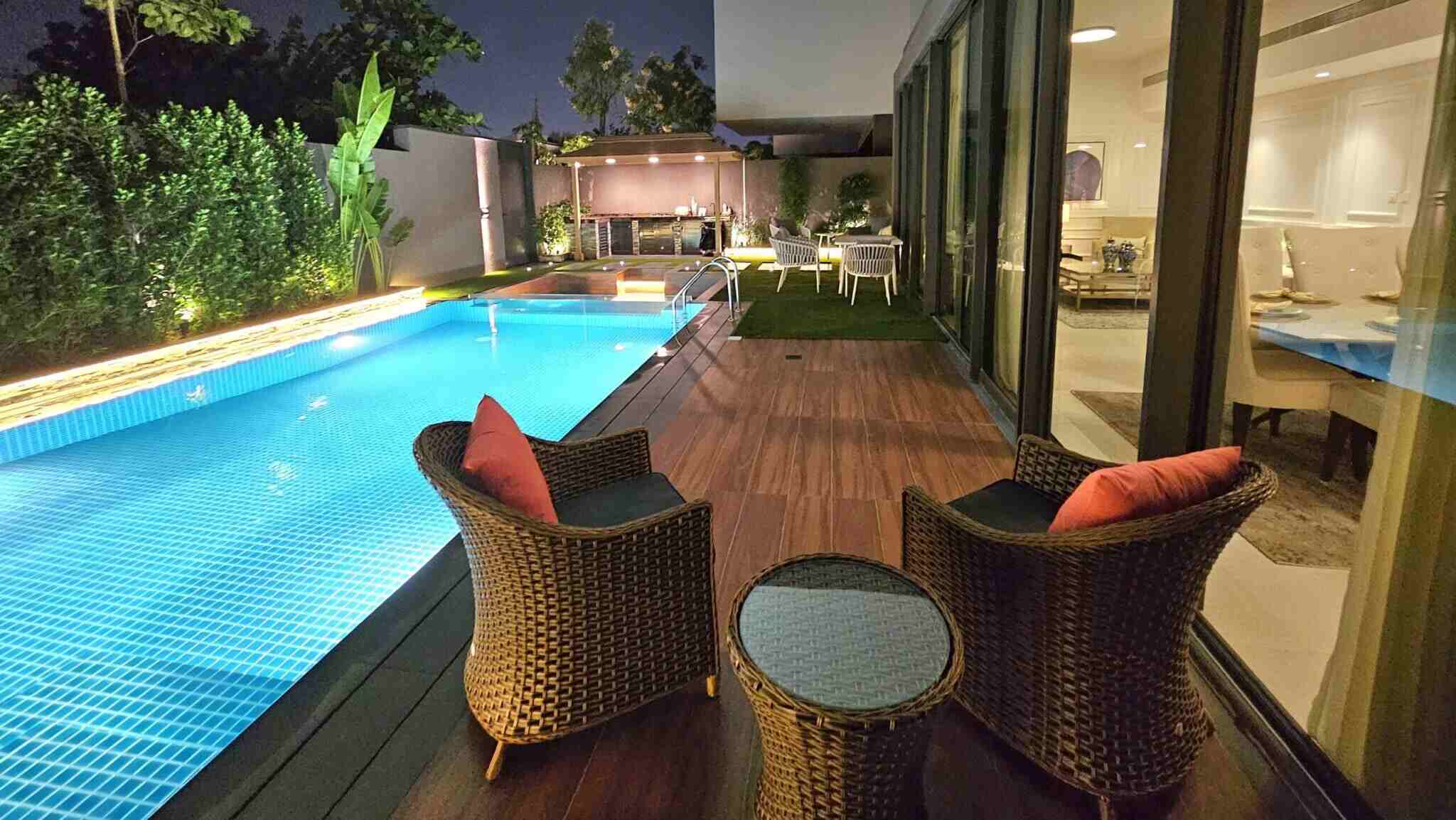
Swimming pool retiling is the process of removing worn, cracked or stained tiles from a pool's floor, walls, steps and waterline, repairing the surface underneath, and installing new tiling — usually alongside a check of the waterproofing membrane that sits beneath it. In Dubai, this is one of the most common renovation jobs we carry out, largely because of how the local water and climate affect pools over time.
Dubai's water carries a high mineral content, and constant exposure to strong UV and summer heat puts real stress on grout lines and tile adhesive. Over five to eight years, even a well-built pool typically starts showing hairline cracks in grout, mineral staining along the waterline, or tiles that have started to lift at the edges. Left alone, this isn't just a cosmetic issue — a compromised tile line is often where water starts working its way behind the surface, leading to a slow leak that's far more expensive to fix once it reaches the structural waterproofing layer.
As a licensed pool renovation company in Dubai, we treat retiling as a structural job with a cosmetic result, not the other way around. That distinction is what separates a retile that lasts a decade from one that needs redoing in two years.
Signs Your Pool Needs Retiling
Most homeowners contact us after noticing one or more of the following. If any of these sound familiar, it's worth getting a proper inspection before the issue spreads.
Get a Free Pool Inspection
Send us a few photos of your tile line or waterline stains and we'll give you an honest read on whether it's a retiling job, a resurfacing job, or both.
Call +971 50 866 5595 Contact Us Online- Mosaic, glass & natural stone tiling
- Waterproofing & leak detection
- Grout & tile repair
- Pool resurfacing & replastering
- Coping & deck renovation
- Filtration & equipment upgrades
Cracked or Missing Tiles
Individual tiles that have cracked, chipped, or come away entirely from the surface, often near the waterline or pool steps.
Discoloured Grout & Staining
Grout that has turned yellow, grey or black, or a waterline band that no longer cleans up with normal chemical treatment.
Rough or Sharp Edges
Grout lines or tile edges that feel rough, sharp or uneven underfoot — often a sign of grout erosion or tile lippage.
Loose or Hollow-Sounding Tiles
Tiles that shift slightly underfoot or sound hollow when tapped usually mean the adhesive bond has failed underneath.
Unexplained Water Loss
A pool that keeps losing water beyond normal evaporation may have a leak developing behind the tile line, not just a surface problem.
Outdated Tile Style
Sometimes there's no damage at all — just an older tile pattern or colour that no longer matches an updated garden or pool deck.
How We Approach a Retiling Project
Every retiling job starts with drainage and inspection — not a tile sample book. Here's the sequence we follow on a typical Dubai villa pool.
Drain & Inspect
The pool is fully drained so we can inspect the tile, grout, plaster and waterproofing layer underneath in proper light — a wet or partially filled pool hides exactly the damage we need to see.
Leak Detection
Since the pool is already drained, this is the most practical point to run leak detection and confirm whether water loss is coming from the shell, plumbing, or fittings before any new tile goes down.
Tile & Grout Removal
Old tiles and grout are stripped back to the substrate, checking for cracks or hollow spots in the plaster or render layer as we go.
Surface Repair & Waterproofing
Any cracked or damaged substrate is repaired, and the waterproofing membrane is reapplied or patched before new tiling begins — skipping this step is the most common reason a retile fails early.
Tile Installation
New tiles — mosaic, glass or natural stone, based on what you've chosen — are installed across the floor, walls, steps and waterline, with attention to consistent grout lines and level coping edges.
Grouting & Sealing
Grout is applied and, where natural stone is used, a sealant is added to protect against Dubai's hard water and mineral buildup.
Refill & Water Balancing
The pool is refilled and the water chemistry balanced before handover, so the new tile and grout aren't exposed to unbalanced water in their first days.
Mosaic, Glass & Natural Stone Pool Tiling
The right tile depends on your pool's shape, how it's used, and how much upkeep you want to deal with long-term.
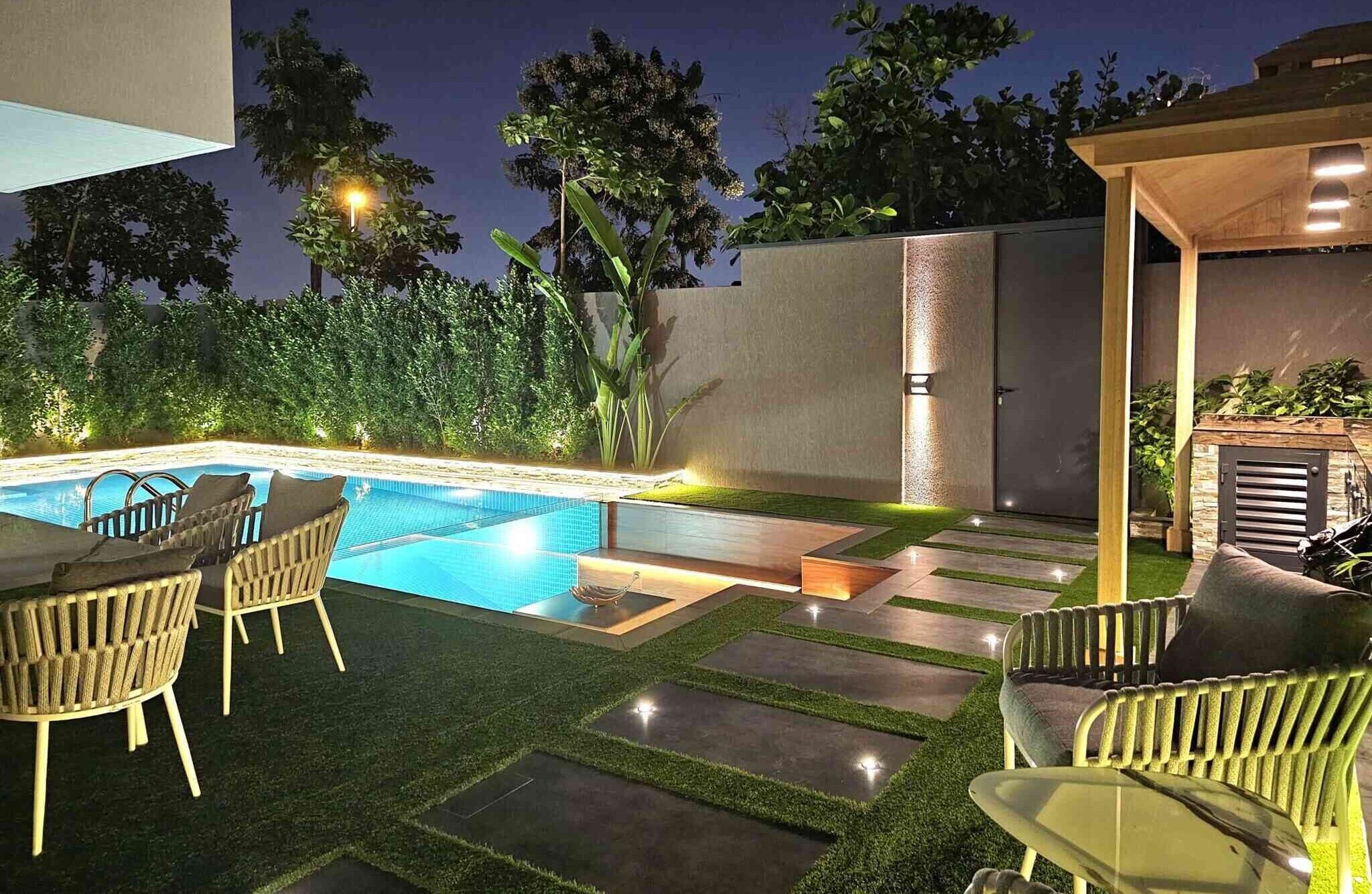
Mosaic Pool Tiling
Small-format tiles that flex naturally around curved walls, steps and rounded pool edges — the most flexible option for freeform pool shapes.
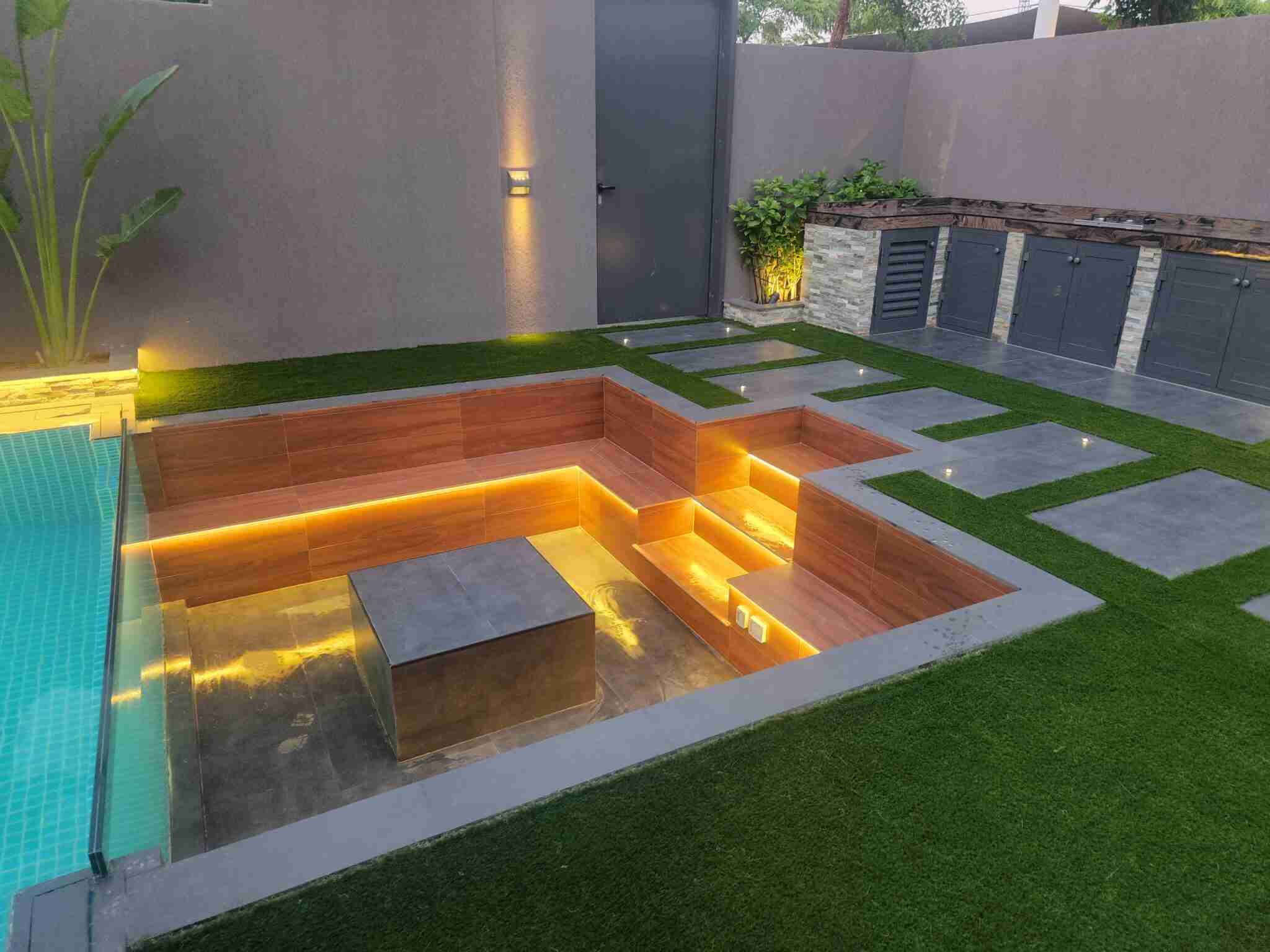
Glass Pool Tiling
Reflects light for a brighter, richer water tone and resists mineral staining well, making it a common choice for waterline tile replacement.
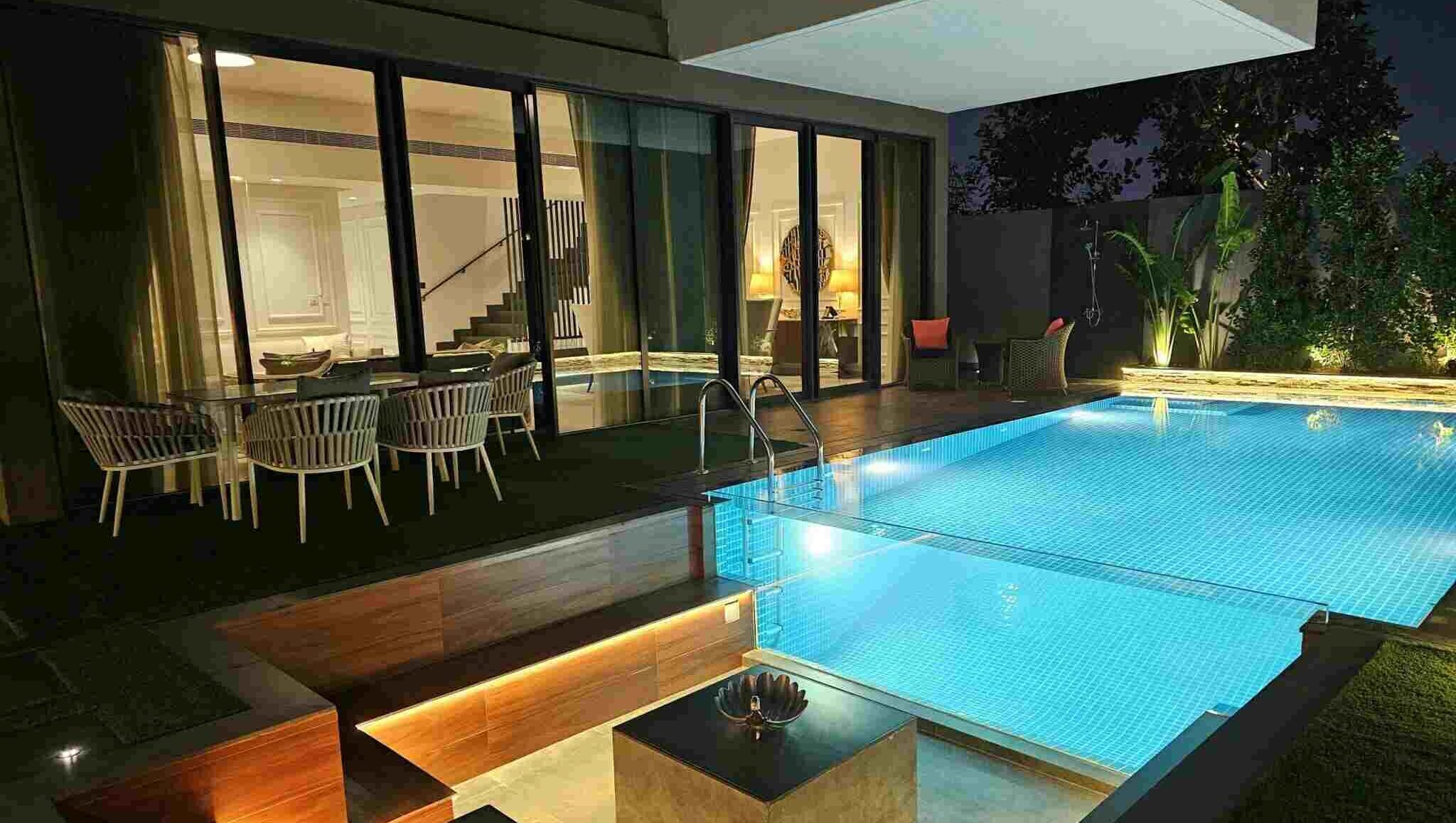
Natural Stone Tiling
A textured, high-end look for pool floors and coping — needs proper sealing to stand up to Dubai's hard water, which we build into the finishing stage.
Waterline, Floor & Step Tile Replacement
The waterline band takes the most visible wear of any part of a pool, since it's exposed to constant sun, splash-out and mineral deposits from evaporating water. Waterline tile replacement is often done on its own, without a full pool retile, when the rest of the tiling is still in good condition. Floor tile and step tile replacement, by contrast, usually points to broader wear and is typically assessed alongside the full pool surface.
Pool Resurfacing & Replastering
Retiling and resurfacing solve different problems, and pools sometimes need both. Resurfacing (or replastering) rebuilds the plaster or render layer beneath the tile — the structural surface that gives the pool shell its shape and smoothness. If your pool's plaster is cracked, pitted or rough, we'll flag this during inspection and scope it alongside the tiling rather than tiling over a compromised surface.
Grout Repair & Tile Repair
Not every pool needs a full retile. If the tiles themselves are sound but the grout has eroded or discoloured, grout repair alone can restore the pool's appearance and seal the surface at a fraction of the work. Individual cracked or missing tiles can also be repaired in isolation, provided the surrounding tile and substrate are still in good condition.
Swimming Pool Waterproofing & Leak Detection
Because retiling requires a fully drained pool, it's the most practical time to also carry out leak detection and waterproofing repair. A pool losing water beyond normal evaporation almost always has a leak somewhere in the shell, plumbing, or fittings — finding and sealing it while the pool is already open avoids draining the pool twice for two separate jobs.
Pool Coping & Deck Renovation
Coping — the edge tiling or stone that caps the pool's perimeter — takes constant foot traffic and sun exposure, and often needs replacing at the same time as the main pool tiling. Where the surrounding pool deck is also worn, cracked, or simply due for an update, we scope deck tiling and renovation as part of the same project so the finished pool and deck match.
Pool Plumbing Repair & Equipment Upgrades
A drained pool is also a practical opportunity to address plumbing repair, since pipe runs beneath the tile line are easiest to access before new tiling goes down. Many clients use a retiling project to upgrade ageing equipment at the same time — a pool pump replacement, a filtration upgrade for better water clarity, or switching to LED pool lighting for a more efficient and longer-lasting fixture around the tile line.
Not Sure What Your Pool Needs?
Retiling, resurfacing, or a leak repair — send us a few photos and we'll tell you honestly which one applies before quoting anything.
Call +971 50 866 5595 Contact Us OnlinePool Renovation & Retiling Projects
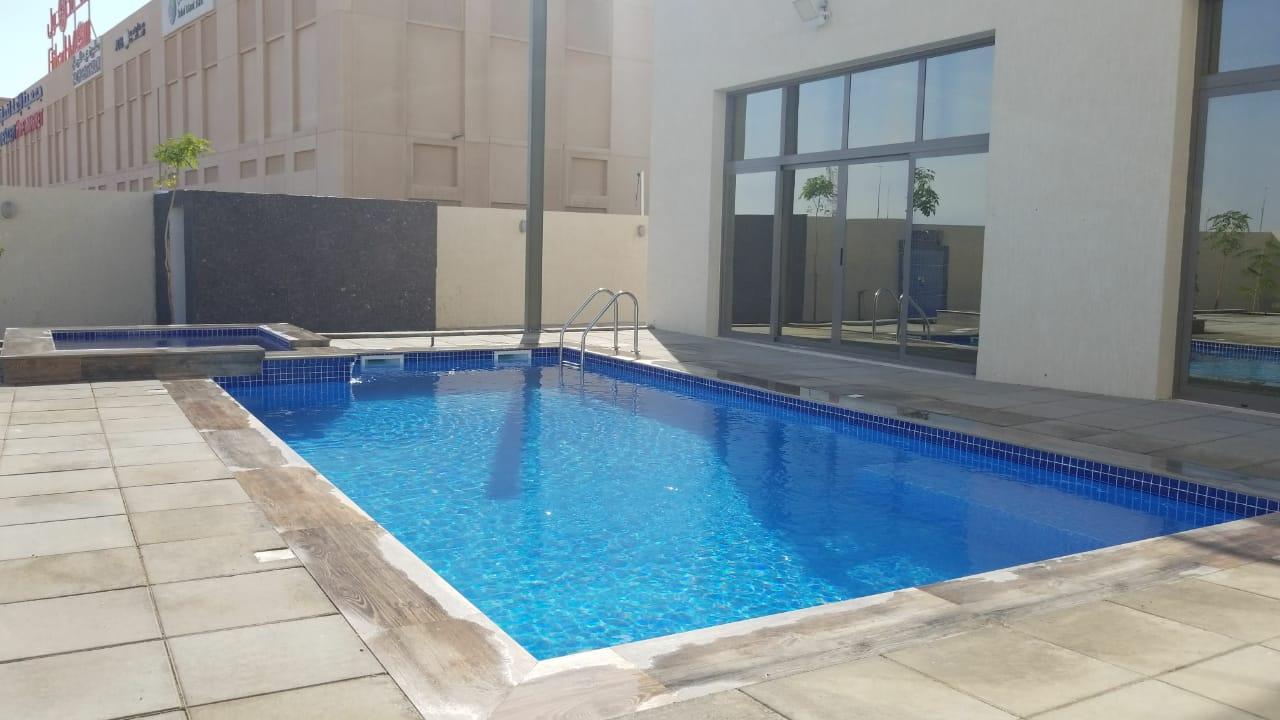
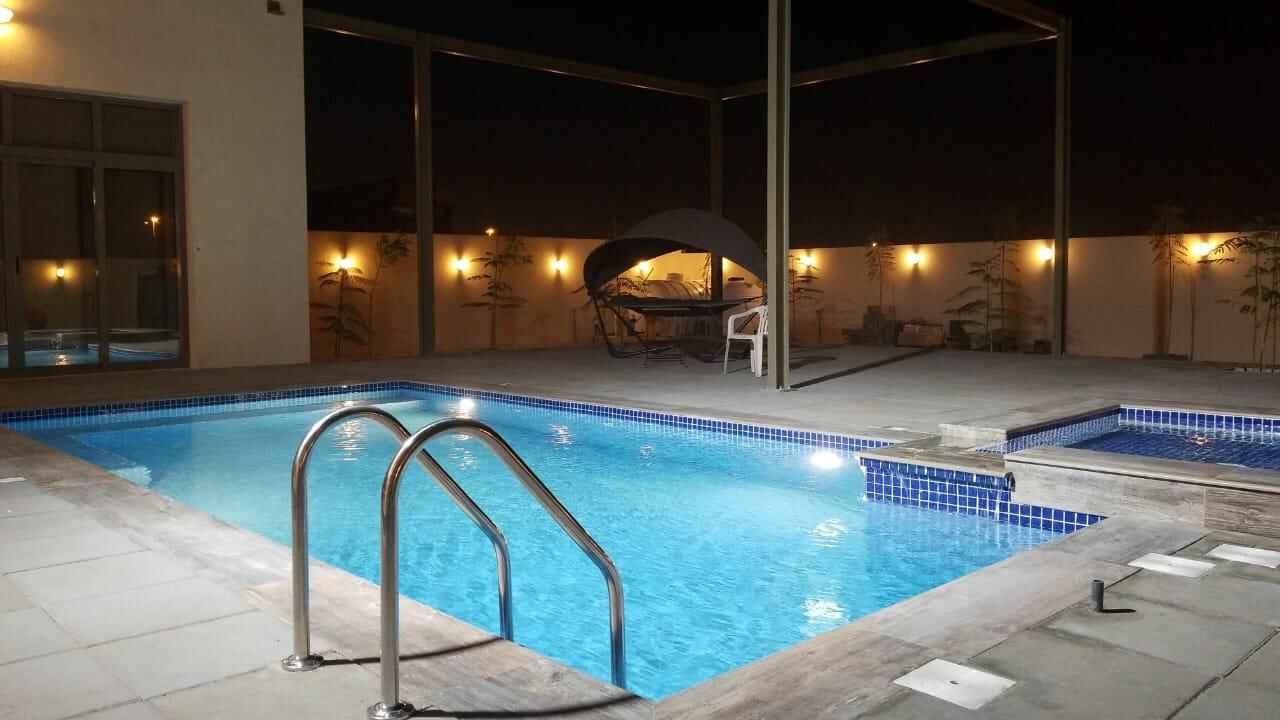
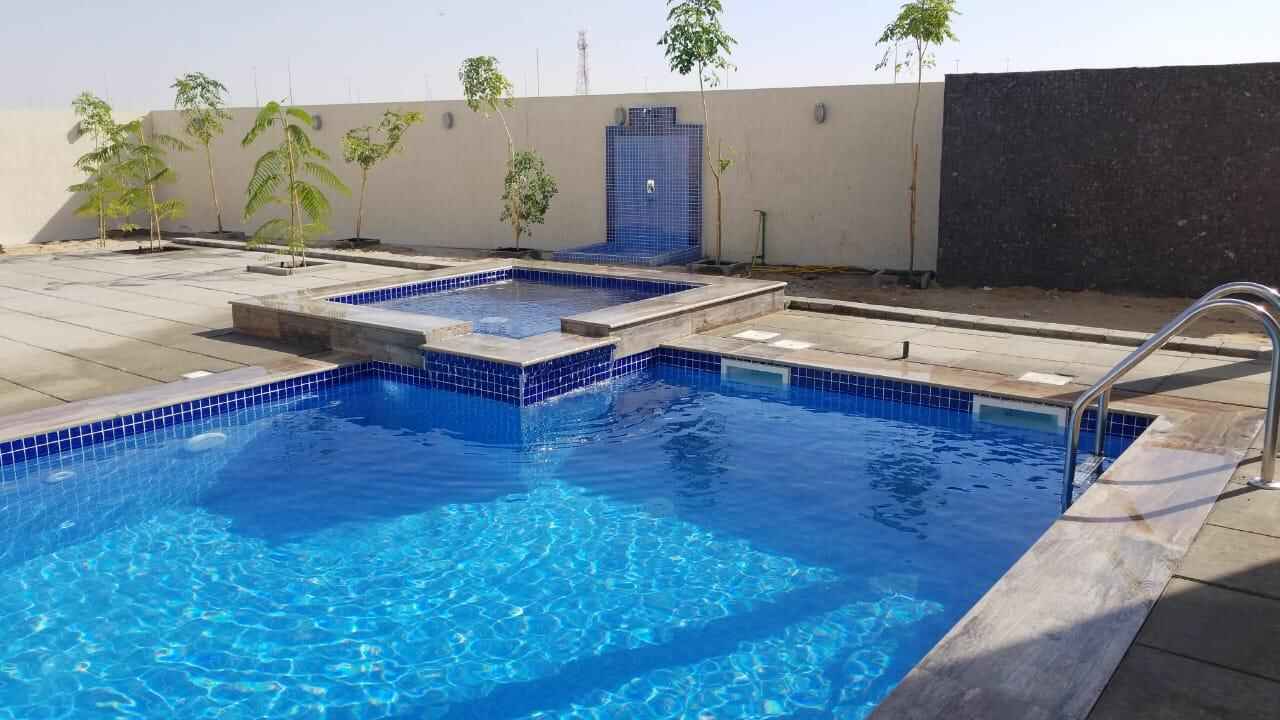
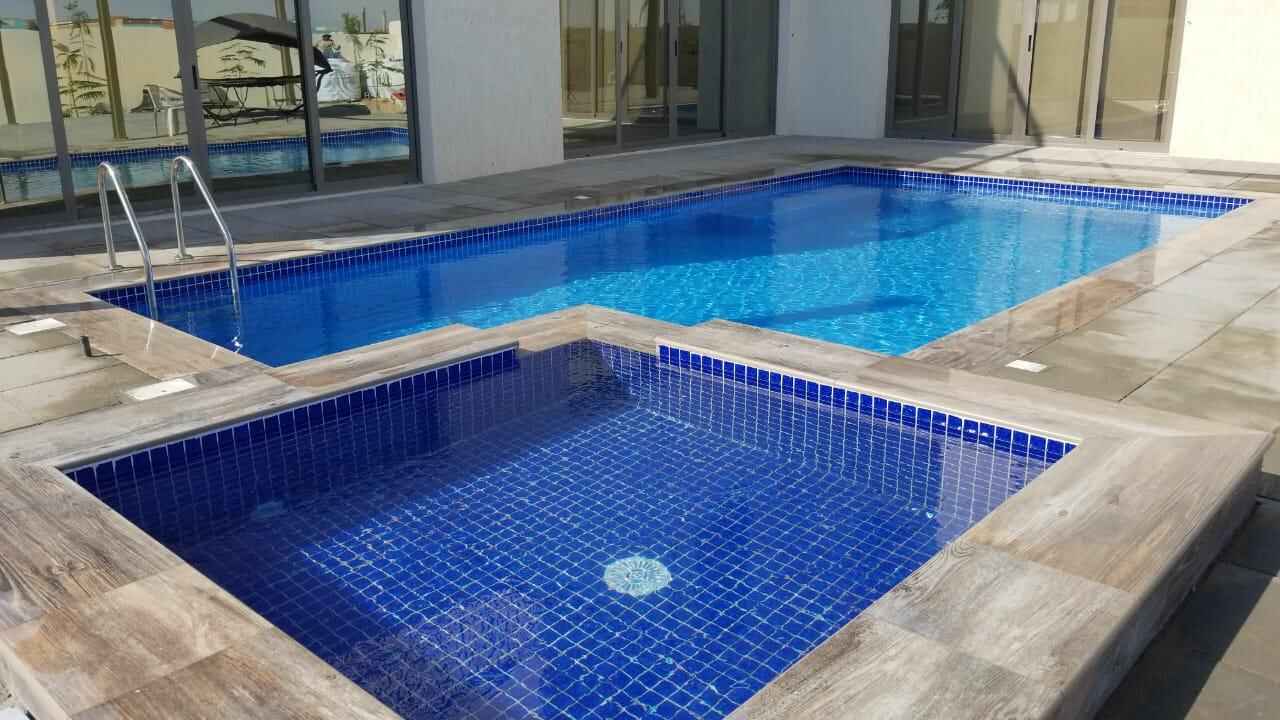
A look at recent retiling and renovation work across Dubai and Sharjah villa communities.
A Licensed Pool Contractor With Renovation Experience Across Dubai
We're a Dubai-based swimming pool contractor working on both new construction and renovation — retiling, resurfacing, waterproofing and leak repair — for villas, commercial properties and residential communities.
Years of Pool Industry Experience
Renovation & Retiling Projects
Days a Week Availability
Drained & Inspected Before Quoting
Common Questions About Pool Retiling in Dubai
Common signs include cracked or missing tiles, rough or sharp grout lines, discoloured or stained tiles that no longer clean up, tiles that feel loose underfoot, and a waterline band that looks dull compared to the rest of the pool. A steady drop in water level can also point to a leak behind the tile line rather than a surface issue.
A standard villa pool retiling project typically takes one to three weeks, depending on pool size, the condition of the surface underneath, and whether waterproofing or plaster work is needed alongside the tiling.
No — retiling requires the pool to be fully drained so the surface can be inspected, repaired and prepared properly. Tiling over a partially filled or damp surface leads to poor adhesion and early tile failure.
Mosaic tiles are small-format and flexible around curves and steps, glass tiles reflect light for a brighter water tone and resist mineral staining well, and natural stone offers a textured, high-end look but needs sealing to handle Dubai's water hardness. We help you choose based on your pool's shape and how it's used.
No. Retiling replaces the tile finish itself, while resurfacing or replastering rebuilds the plaster or render layer beneath. Many older pools need both done together, which we assess during the site inspection.
Yes. Since the pool is already drained for retiling, this is the most cost-effective time to carry out leak detection and waterproofing repair, so both issues are resolved in a single project instead of two separate ones.
Get a Free Pool Retiling Inspection
Tell us what you're seeing — cracked tiles, dull grout, or water that keeps dropping — and we'll come take a proper look before recommending anything.