

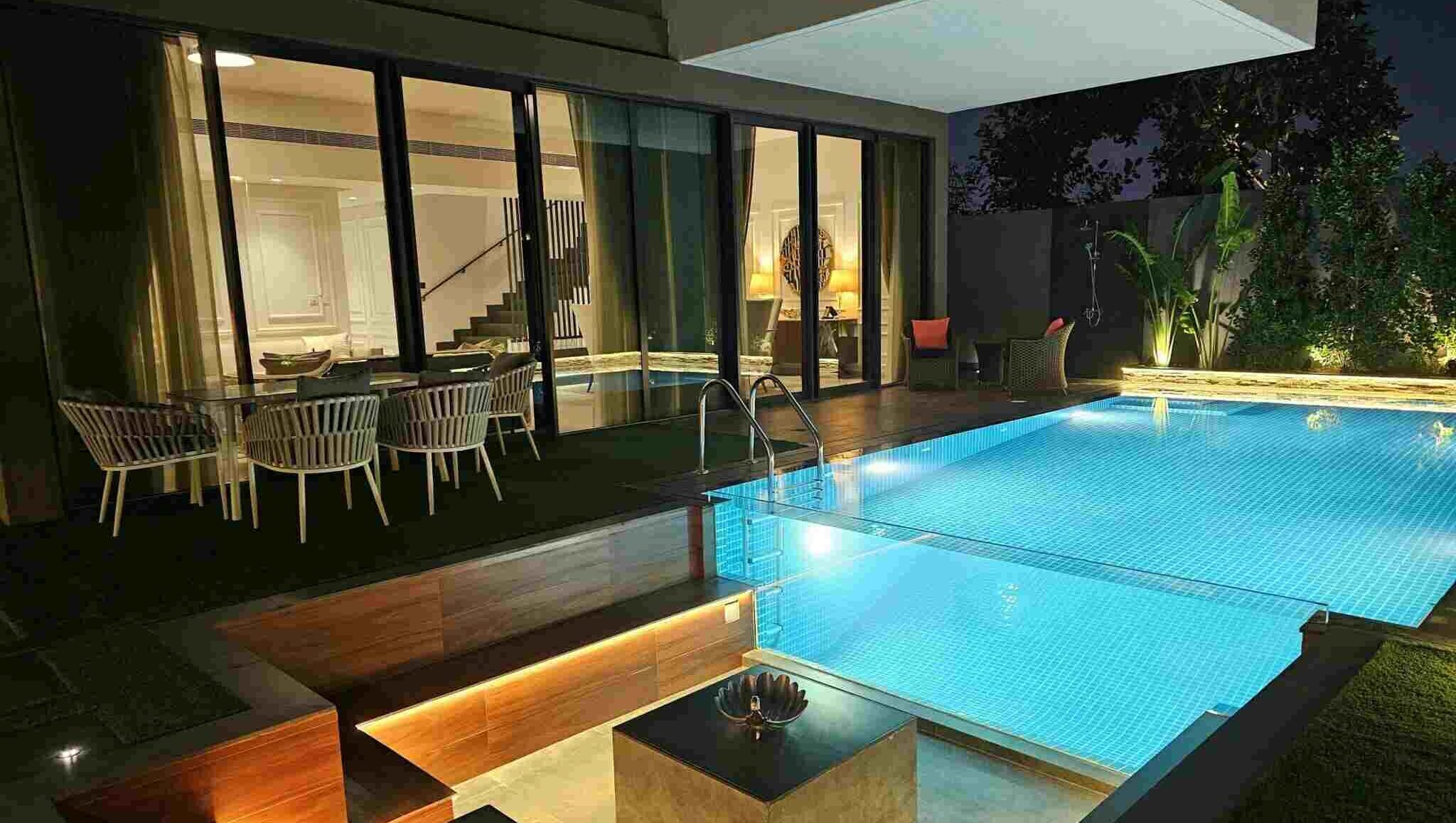
Swimming Pool Waterproofing in Dubai
Structural waterproofing for pool shells, decks, tanks and joints — crystalline, liquid membrane, polyurethane and epoxy systems, applied by a licensed Dubai pool contractor and matched to what's actually causing the leak.
A pool that keeps losing water beyond normal evaporation, tiles that lift near the waterline, or damp patches spreading across the deck are rarely cosmetic problems — they're usually signs that the waterproofing layer beneath the surface has failed. In Dubai, this shows up faster than most owners expect. Hard water, constant chlorine exposure, and the wide temperature swing between a 45°C summer afternoon and a cooler winter night all put steady stress on a pool shell, and once capillary water penetration starts working its way through hairline cracks, it rarely stays a small problem for long.
Hello Landscaping & Pools LLC provides swimming pool waterproofing across Dubai — for concrete pools, underground pools, rooftop installations and infinity pools — using the same structural approach we apply to new-build construction. We don't treat waterproofing as a coating applied at the end of a job; we treat it as the layer that determines whether the rest of the pool holds up.
Why Dubai's Climate Wears Down Waterproofing Faster
Three things work against a pool's waterproofing system here specifically: mineral-heavy water that accelerates wear on membranes and grout, UV exposure that degrades unprotected coatings over time, and constant chlorine contact that some lower-grade sealants simply aren't rated for. A waterproofing system designed for a milder climate — or applied without proper substrate preparation — tends to fail years earlier in Dubai than the manufacturer's stated lifespan would suggest.
This is also why we assess every waterproofing job on a case-by-case basis rather than applying one standard fix. A hairline surface crack, a failed construction joint, and water seepage through the pool floor each call for a different repair approach — and treating all three the same way is the most common reason a "waterproofing fix" doesn't actually hold.
Signs Your Pool Needs Waterproofing Attention
- Water level dropping faster than evaporation alone would explain
- Damp patches or pooling water on the deck or ground beside the pool
- Lifting, cracked or hollow-sounding tiles near the waterline or floor
- Efflorescence — white, chalky mineral staining around joints or cracks
- Visible cracks or fissures in the pool shell, coping, or deck
- Persistent dampness in a room or basement beneath or beside the pool
If you're seeing any of these, the underlying cause is worth identifying properly before resurfacing or retiling — otherwise the same moisture ingress will simply resurface through the new finish.
How We Diagnose the Problem First
Before any waterproofing material goes on, we carry out a proper waterproofing inspection: a visual moisture inspection to map where water is tracking, followed by hydrostatic pool testing to check whether the water loss is coming from the pool shell itself or from surrounding groundwater pressure. In some cases, a pressure testing sequence on the plumbing lines is also needed to rule out a pipe leak being mistaken for a shell or membrane failure. This diagnostic step is what separates a lasting repair from a patch that fails again within a season.
Waterproofing Systems We Use
Different pools call for different systems, and we'll walk you through which applies to your specific case rather than defaulting to one product for every job:
- Crystalline waterproofing — reacts chemically with the concrete substrate itself, forming crystals that block capillary water penetration from within the material and continue sealing minor future hairline cracks as they appear.
- Liquid membrane waterproofing — a flexible, seamless waterproof coating applied directly over the pool shell, well suited to complex shapes and detailing around fittings.
- Cementitious waterproofing — a rigid, cement-based waterproof coating often used on the pool tank and basin, valued for strong adhesion to concrete substrates.
- Polyurethane waterproofing — a highly flexible, UV- and chemical-resistant coating, often specified for decks and exposed surfaces that see direct sun.
- Epoxy waterproofing — a dense, chemical-resistant system used where extra mechanical strength and chlorine resistance are priorities.
Crystalline and liquid membrane systems are the two we're asked about most. In short: crystalline works from within the concrete and is well suited to structural, below-grade applications like underground pools and tanks, while liquid membrane forms a surface barrier that handles complex geometry — such as steps, corners and fittings — more easily. We'll recommend the right one, or a combination of both, based on what our inspection finds.
Our Waterproofing Process
Every project follows the same structural sequence, regardless of which system we're applying:
- Substrate preparation — removing loose material, old coatings and contamination so the new system bonds properly. Poor surface preparation is the single most common reason waterproofing fails prematurely.
- Structural crack injection — cracks and fissures are sealed using concrete crack injection resin, restoring structural integrity before any membrane goes on top.
- Joint sealing — expansion joints, movement joints and construction joints are resealed with a flexible waterproof sealant rated to handle the pool's natural expansion and contraction.
- Membrane or coating application — the selected waterproofing system is applied in the correct number of coats and thickness for the substrate and exposure conditions.
- Curing — the system is left to cure fully under controlled conditions before tiling, filling, or re-use.
- Final testing — a follow-up pressure test and visual inspection confirm the repair is holding before the pool goes back into service.
Where We Apply Waterproofing
We waterproof every part of the pool structure that's exposed to water pressure or moisture, including the pool shell and basin, pool walls and floor, coping, and the deck surrounding the pool. This extends to specialized applications such as underground pool waterproofing (where surrounding groundwater pressure adds a layer of complexity), rooftop swimming pool waterproofing (where a leak risks the structure below), infinity pool waterproofing (with particular attention to the weir wall and balance tank), and water tank waterproofing for pump rooms and storage tanks connected to the pool system.
Renovation, Not Just Repair
Waterproofing often comes up as part of a broader pool renovation — alongside pool tile repair, grout repair, or a full pool resurfacing where the finish has aged out along with the waterproofing beneath it. We scope these together where it makes sense, since retiling over a compromised waterproofing layer just delays the same problem rather than solving it. Where a pool only needs remedial waterproofing without a full renovation, we handle that as a standalone project too.
Get a Free Waterproofing Inspection
Send us a few photos of the affected area and we'll tell you honestly whether it's a localized repair or a full membrane renewal.
Request Free Inspection Or call +971 50 866 5595We Waterproof
- Concrete & underground pools
- Rooftop swimming pools
- Infinity pool edges & tanks
- Pool decks & coping
- Water tanks & pump rooms
The right system, matched to the actual problem
We don't apply one standard product to every job — the system depends on what our inspection finds and how the pool is constructed.
Crystalline Waterproofing
Reacts with the concrete itself, blocking capillary water penetration from within and self-sealing minor future cracks — a strong fit for underground and below-grade pools.
Liquid Membrane Waterproofing
A seamless flexible barrier applied over the shell, well suited to complex shapes, steps and fittings where a rigid system would be harder to detail properly.
Polyurethane Waterproofing
Flexible and highly resistant to UV and chlorine exposure — commonly specified for pool decks and any surface that sits in direct Dubai sun year-round.
Epoxy Waterproofing
A dense, chemically resistant coating used where extra mechanical strength and long-term chlorine resistance are the priority.
From inspection to final pressure test
Moisture & Hydrostatic Inspection
We map where water is tracking and pressure-test to confirm the real source before any repair begins.
Substrate Preparation
Loose material and old coatings are removed so the new waterproofing system bonds correctly.
Crack Injection & Joint Sealing
Structural cracks and movement joints are sealed before any membrane or coating is applied.
System Application
Crystalline, membrane, polyurethane or epoxy — applied to the correct thickness and coat count.
Controlled Curing
The system cures fully before tiling, filling, or the pool returning to service.
Final Pressure Test
A follow-up test confirms the repair is holding before we consider the job complete.
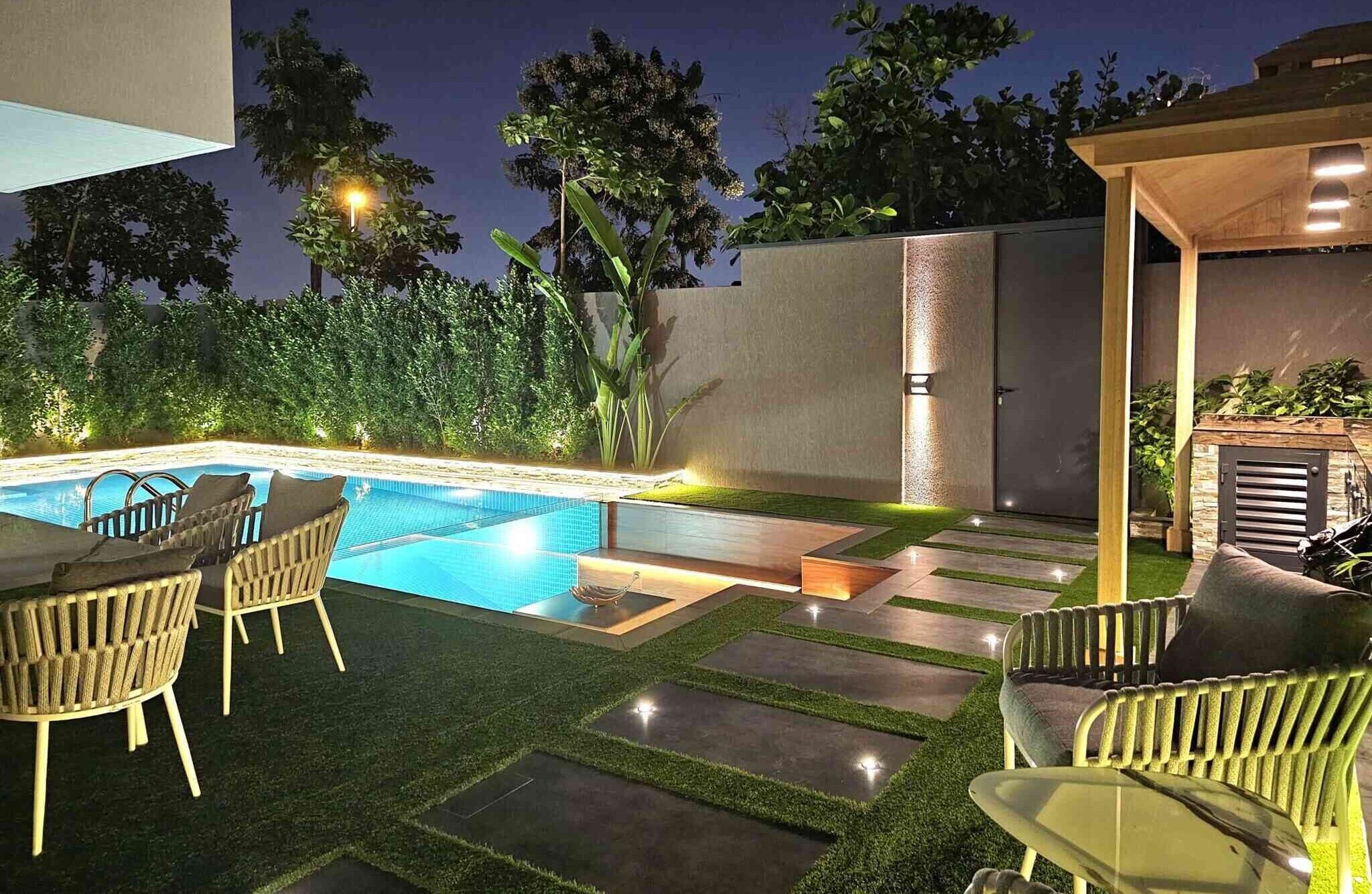
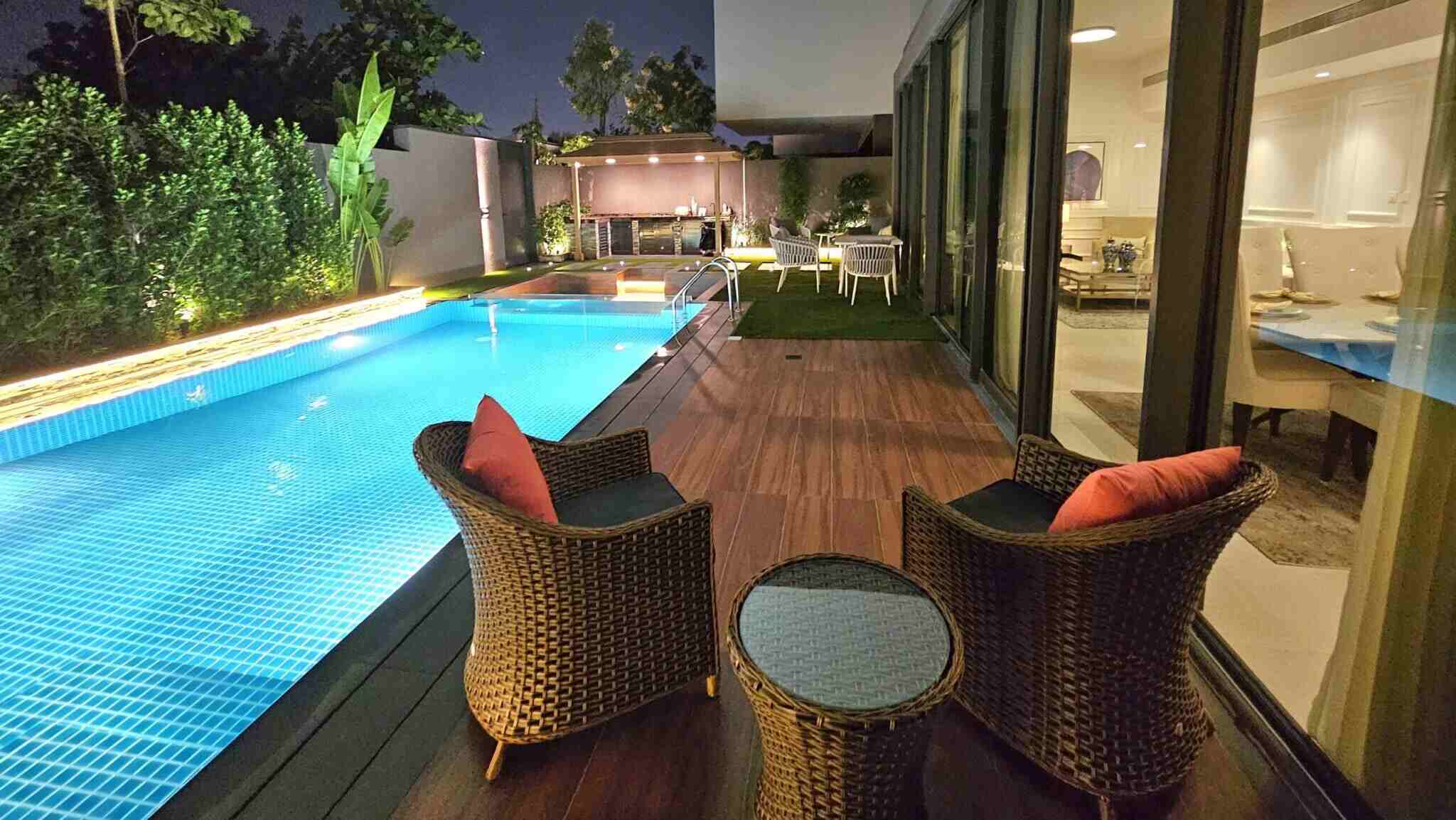
Waterproofing and pool renovation projects across Dubai
Waterproofing handled by pool builders, not just applicators
Because we also build pools from the ground up, we understand pool structure — not just surface coatings.
Licensed Dubai Contractor
Work carried out to Dubai Municipality standards, by a team that also handles new pool construction and NOC approvals.
Diagnosis Before Repair
Hydrostatic testing and moisture inspection identify the actual cause before we recommend a system, not after.
Multiple System Options
Crystalline, liquid membrane, polyurethane and epoxy — matched to your pool's construction, not a single default product.
Swimming pool waterproofing, answered
Visible signs include damp patches on the ground beside the pool, a water level that keeps dropping beyond normal evaporation, cracked or lifting tiles, and efflorescence (white mineral staining) around joints. A moisture inspection and hydrostatic pressure test confirm whether the shell itself is compromised.
Crystalline waterproofing reacts chemically with the concrete itself, forming crystals that block capillary water penetration from within the substrate, and continues to self-seal minor future cracks. Liquid membrane waterproofing forms a flexible barrier coating over the surface. Both are used across our projects, and the right choice depends on the pool's construction and the cause of the leak.
In some cases, yes — localized crack injection and joint resealing can be carried out with partial draining. A full waterproofing membrane renewal typically requires the pool to be drained, which we assess and explain clearly before starting work.
A properly installed waterproofing system, matched to the right substrate and applied with correct surface preparation, typically holds up for many years under Dubai's heat and hard water conditions. Longevity depends on the system used, application quality, and ongoing pool maintenance.
Yes. Rooftop pools and infinity pools both carry additional waterproofing considerations — rooftop pools due to the structure beneath them, and infinity pools due to the balance tank and weir wall — and we treat both as specialized waterproofing projects rather than standard applications.
Talk to a Waterproofing Specialist Today
Send us a few photos of the affected area, or request a free on-site inspection — we'll tell you plainly what's causing it and what it will take to fix.