

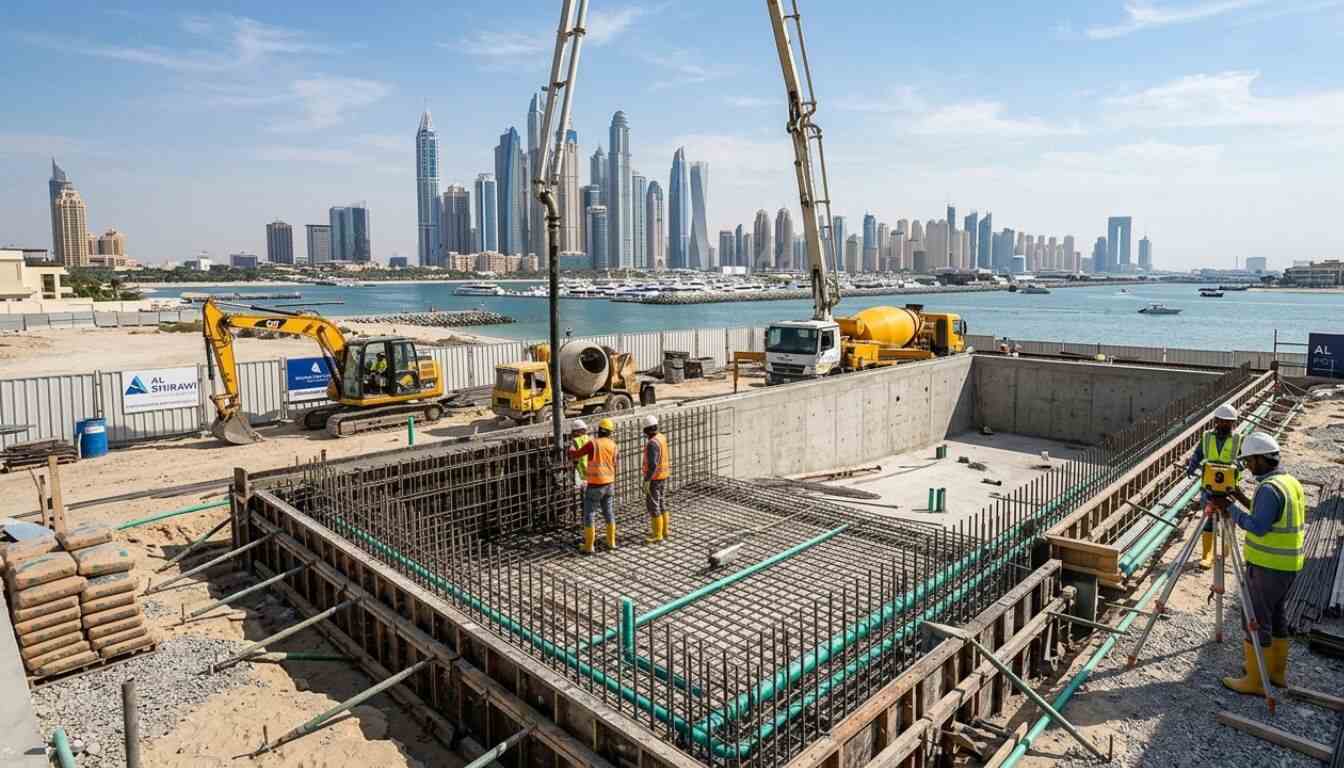

Building a swimming pool in Dubai involves site assessment, structural engineering suited to the region’s soil and heat, waterproofing, filtration and plumbing installation, and approvals from Dubai Municipality, Trakhees, or the Dubai Development Authority depending on the property location. A well built pool typically takes between six and twelve weeks to complete, though large villa or commercial projects can take longer depending on design complexity and approval timelines. Whether you are hiring a swimming pool construction company for a new villa build or comparing swimming pool builders in Dubai for a renovation, understanding this process helps you ask the right questions before signing a contract.
Why Pool Construction in Dubai Requires Specialized Engineering
Dubai’s climate and ground conditions are unlike most other markets, and this is where generic construction knowledge starts to fall apart. Summer temperatures regularly cross 45 degrees Celsius, which puts constant thermal stress on concrete shells, tile adhesives, expansion joints, and pool equipment housed in direct sun. Groundwater in many parts of the emirate carries high salinity, which can corrode poorly selected metal fittings, stainless steel ladders, and degrade weak waterproofing membranes over time. Add to this the fine desert sand that settles into filtration systems and skimmer baskets, and it becomes clear why a pool built with generic construction methods rarely performs well here for long.
A contractor working in this environment needs to account for soil bearing capacity, water table depth, UV exposure on exposed finishes, wind loading on raised or rooftop structures, and evaporation rates when sizing the filtration and top up systems. Coastal areas such as Palm Jumeirah, Jumeirah Bay, and Dubai Marina also deal with higher humidity and salt laden air, which changes the choice of coping stone, metal fixtures, and even the type of pool light housing used. This is engineering work, not just aesthetic design, which is why experienced swimming pool builders in Dubai treat every villa as a distinct engineering case rather than a copy paste job.
Get a Free Swimming Pool Consultation in Dubai
Types of Swimming Pools Built in Dubai
Not every villa or development needs the same type of pool, and understanding the options helps homeowners have a more informed conversation with their swimming pool construction company.
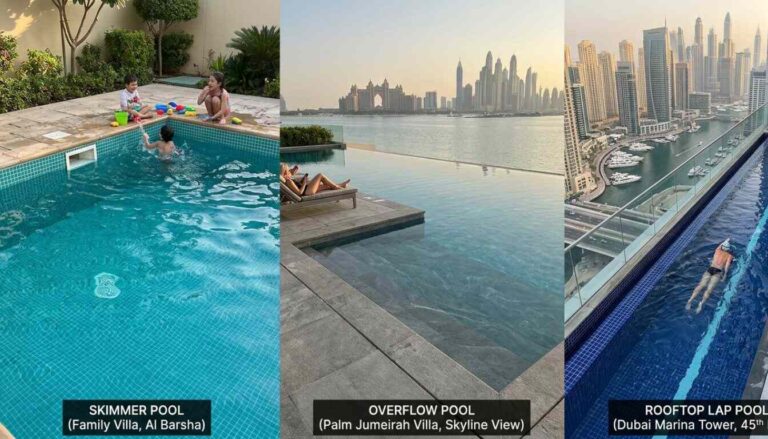
Skimmer pools
Use a lower water level with skimmer boxes on the pool wall to draw in surface debris. They are generally more economical to build and maintain, making them common in family villas across communities like Al Barsha, JVC, and Mirdif.
Overflow and infinity edge pools
Keep the water level flush with the deck, creating a sleek visual effect popular in Palm Jumeirah, Emirates Hills, and Dubai Hills Estate. These require a balance tank, additional plumbing, and more precise leveling during construction, which raises both complexity and cost.
Rooftop and elevated pools
Rooftop and elevated pools are increasingly common in Dubai Marina and Business Bay apartment towers. These need structural load calculations, waterproofing that accounts for the building’s movement joints, and coordination with the building’s existing MEP systems.
Plunge pools and lap pools
Suit smaller plots or fitness focused homeowners, often built with a compact footprint but the same engineering rigor as a full sized pool.
The Real Construction Process, Step by Step
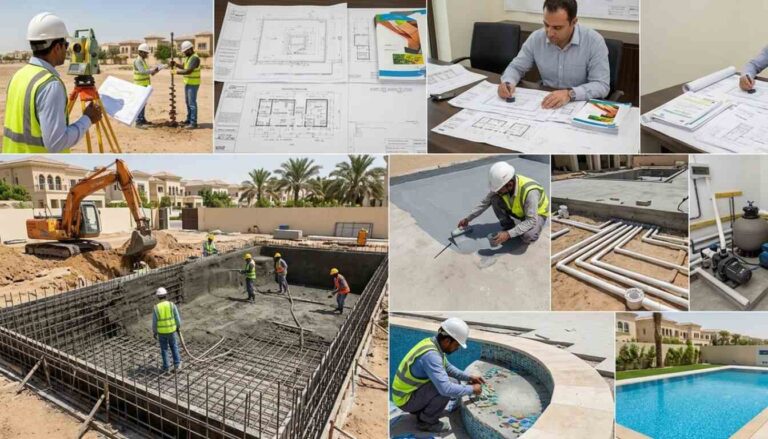
Site Assessment and Structural Design
Before any digging starts, a proper contractor conducts a soil test, checks the water table, and reviews the sun’s path across the property to guide the pool’s orientation. This stage determines the reinforced concrete specification, since a raised pool on Palm Jumeirah sand needs a different structural approach than an in ground pool on firmer soil in Arabian Ranches or Dubai Hills Estate. Geotechnical data from this stage also informs whether piling or a raft foundation is needed beneath the pool shell.
Authority Approvals
Depending on where the villa sits, drawings go to Dubai Municipality, Trakhees, or the Dubai Development Authority for review. Civil Defence checks safety elements such as fencing height, emergency access, and anti entrapment drain covers. DEWA reviews the electrical load for pumps, heaters, and lighting. Master developers in gated communities such as Emaar or Nakheel controlled areas often have their own architectural guidelines that sit on top of municipal requirements. Skipping or rushing this stage is the most common reason projects get delayed midway through construction.
Excavation and Shell Construction
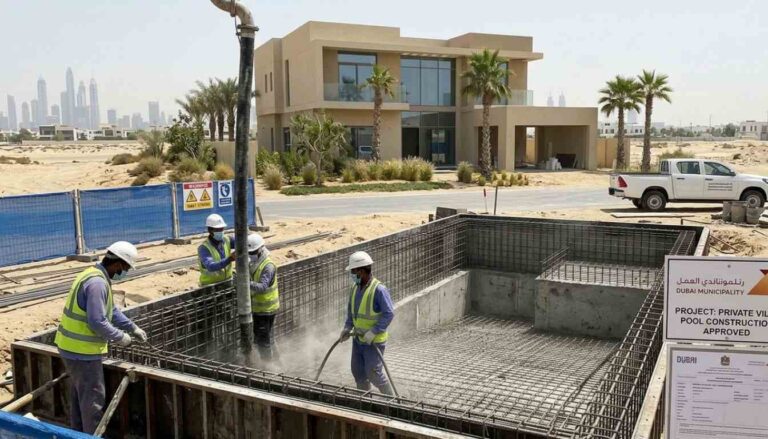
Once approved, excavation begins to the exact depth and profile in the drawings. The shell is usually built using gunite or shotcrete, sprayed reinforced concrete methods that allow curved and free form shapes such as infinity edges or overflow details. Steel reinforcement bar spacing and concrete cover thickness are calculated to resist cracking from ground movement, thermal expansion, and hydrostatic pressure from the surrounding soil. A reliable swimming pool construction company will document these calculations rather than just eyeballing the pour.
Waterproofing
This is arguably the most important technical layer and the one most often under specified by budget contractors. A cementitious or liquid applied membrane system is chosen based on hydrostatic pressure, chemical exposure from pool water treatment, and the pool’s structural movement joints. Crystalline waterproofing additives are sometimes integrated directly into the concrete mix for an added layer of protection. Poor waterproofing is the leading cause of long term leaks, efflorescence, and tile debonding.
Plumbing, Filtration, and Electrical Installation
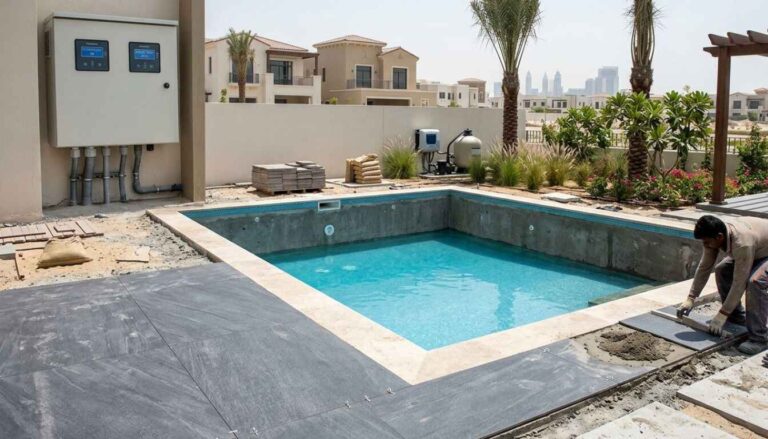
Pipework for skimmers or overflow gutters, main drains, and return jets is installed before the deck is poured. Filtration pumps, sand or cartridge filters, UV or ozone sanitization units, and heating or chilling units are sized to the pool’s volume and bather load, not just its surface area. Electrical work follows DEWA standards, with proper bonding, earthing, and RCD protection for all submerged fittings and pool lighting circuits.
Tiling and Finishing
Waterline tiles, coping stones, and interior finishes such as pebble, quartz, glass mosaic, or micro cement are applied once waterproofing has cured fully. Material choice here affects both appearance and long term durability against Dubai’s UV exposure and mineral rich water, which can gradually etch poorly sealed natural stone.
Testing and Handover
The pool is filled, water chemistry is balanced using chlorine or salt chlorination, and all pumps, heaters, lighting, and automation systems are tested under real operating conditions before handover, along with a walkthrough of safety features, filtration backwashing, and basic maintenance requirements.
Materials and Equipment That Affect Long Term Durability
The equipment selection stage is where many homeowners unknowingly set themselves up for higher running costs. Variable speed pumps use considerably less energy than single speed pumps and are quieter over long operating hours. Sand filters need periodic media replacement, while cartridge filters offer finer filtration but need more frequent cleaning in dusty conditions. Salt water chlorination systems are popular in Dubai villas because they reduce the need for manual chemical dosing, though the salt cell itself needs periodic servicing. Automation panels that control lighting, heating, and circulation remotely are now a common request among villa owners in newer developments such as Dubai Hills Estate and Tilal Al Ghaf.
Design Integration With Landscaping
A pool that looks disconnected from its surroundings undervalues the property. Coping stone selection, deck material, planting beds, water features, and outdoor lighting should be planned together with the pool rather than added afterward. Shade structures such as pergolas also affect water temperature and evaporation, which in turn affects filtration sizing. This is where many single discipline pool companies fall short, since landscaping and pool construction are treated as two separate projects instead of one coordinated outdoor living space.
Common Mistakes Homeowners Should Avoid
Many pool problems trace back to decisions made early in the project rather than poor workmanship later on. Choosing a filtration system based on pool surface area alone, without accounting for bather load and sun exposure, leads to cloudy water. Skipping soil testing on properties near reclaimed land or coastal fill can cause uneven settlement and cracking within a few years. Selecting decorative tiles without checking slip resistance ratings creates a safety hazard around wet decks. And treating authority approval as a formality rather than a design input often forces costly redesigns midway through construction.
What Determines Long Term Performance
A pool’s lifespan comes down to three things: the quality of the waterproofing membrane, the correctness of the structural design for the local soil and climate, and how well the filtration system is sized for actual usage rather than a generic template. Cutting corners on any of these shows up within two to three years as leaks, cracked tiles, or constantly cloudy water. This is exactly why swimming pool construction in Dubai should never be treated as a purely aesthetic purchase, and why the reputation of the swimming pool builders in Dubai you choose matters more than the initial quote.
Our Services
As one of the reliable swimming pool companies in Dubai, we provide a full range of services including design, construction, and renovation.
Swimming Pool Design
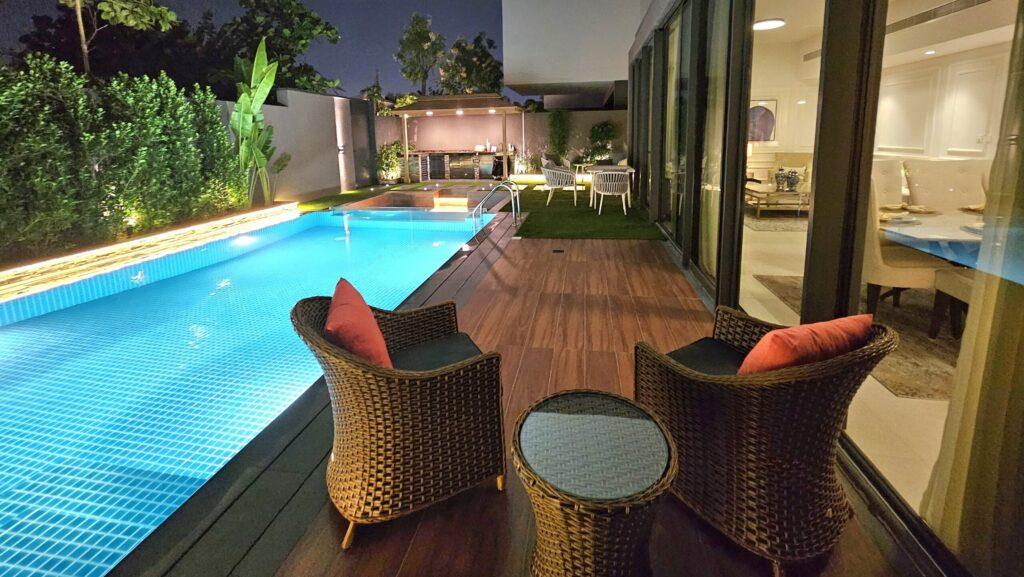
Our designers create custom pool concepts that match your property layout, landscape design & lifestyle. We develop detailed 3D designs to visualize the final pool before construction begins.

Swimming Pool Company
Our professional swimming pool construction company handles the entire building process including excavation, steel structure, plumbing, waterproofing, and finishing.
Hard & Soft Landscape
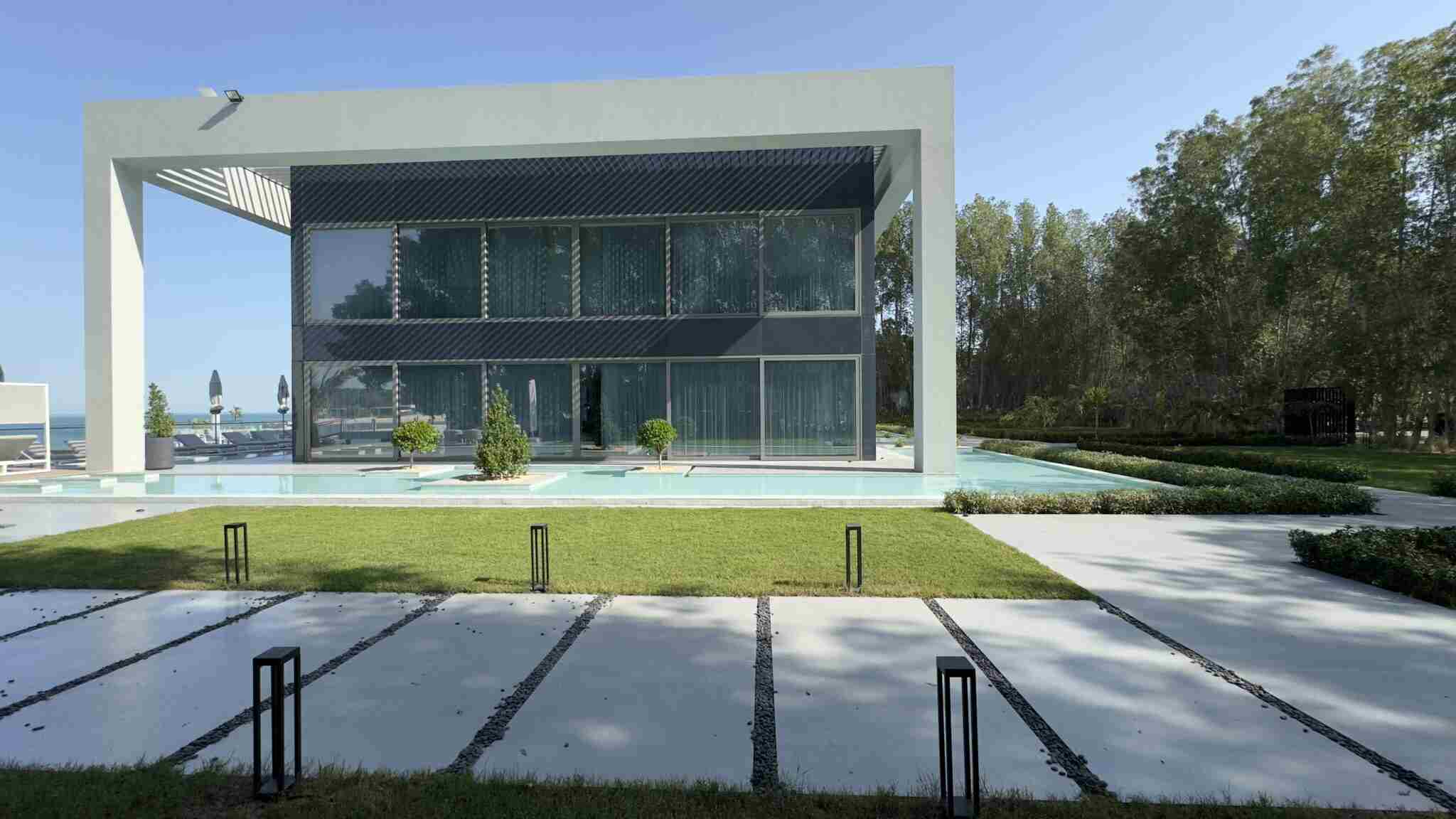
Combining hard elements like paths, patios, and structures with soft elements like plants and lawns to create balanced, attractive outdoor spaces.
Swimming Pool Maintenance
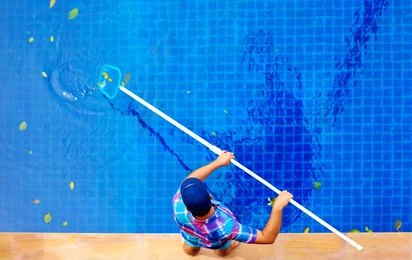
Professional cleaning, chemical balancing, and equipment servicing to keep your pool safe, sparkling, & ready to use year-round.
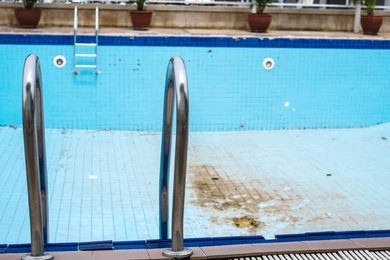
Swimming Pool Cleaning
Expert cleaning services to keep your pool clear, hygienic, and inviting for daily use.
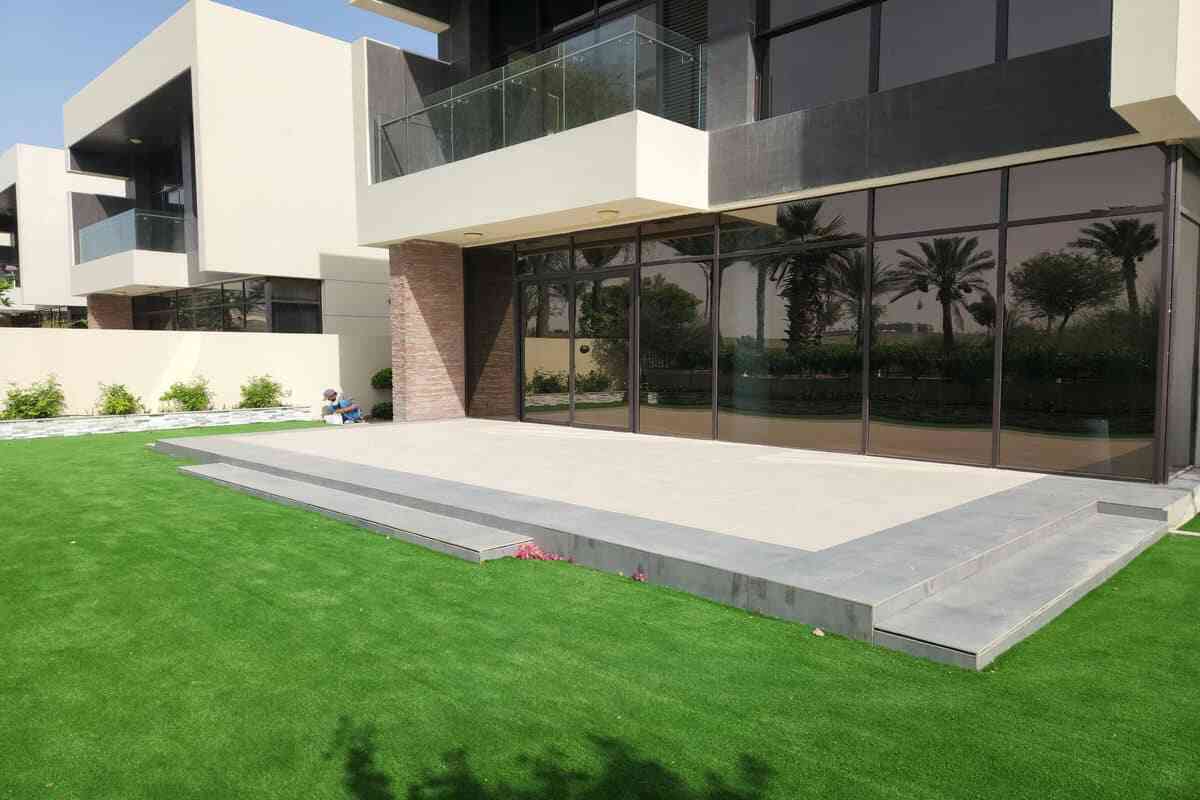
Landscaping
Professional design and installation of gardens, lawns, and outdoor spaces to create beautiful and functional environments.
Frequently Asked Questions
Most villa swimming pools in Dubai take between six and twelve weeks to complete, from approved design to final handover. The exact timeline depends on pool size, design complexity such as infinity or overflow edges, and how quickly authority approvals come through from Dubai Municipality, Trakhees, or the Dubai Development Authority. Commercial or resort scale pools can take several months due to larger structural work and stricter compliance checks.
Pool design in Dubai must account for soil bearing capacity, water table depth, groundwater salinity, extreme summer heat, UV exposure, and evaporation rates. Engineers also factor in the property's orientation to the sun, wind loading for raised or rooftop pools, and local authority safety requirements such as fencing height and anti entrapment drain covers. These conditions directly influence the structural design, waterproofing method, and filtration sizing.
The structural shell and waterproofing typically make up the largest share of a swimming pool's construction cost, since they involve reinforced concrete work, skilled labor, and high grade waterproofing membranes that must withstand Dubai's heat and soil conditions. Design features such as infinity edges, overflow systems, and custom tiling also add significantly to the cost compared to a standard skimmer pool.
Gunite pools are built using sprayed reinforced concrete, which allows fully custom shapes, sizes, and features like infinity edges or raised walls. Fiberglass pools use a pre molded shell that is installed in one piece, offering faster construction but limited design flexibility. Gunite is more common for Dubai villas because it adapts to unique layouts and local structural requirements, while fiberglass suits smaller, budget conscious projects.
Look for a swimming pool construction company that manages the entire process in house, including soil testing, structural design, authority approvals, waterproofing, and finishing, rather than subcontracting each stage to different parties. Ask to see past project examples, confirm they handle Dubai Municipality, Trakhees, or DDA approvals directly, and check that waterproofing and filtration sizing are treated as engineering decisions, not afterthoughts.
A swimming pool is classified as a reinforced concrete structure, most commonly built using the gunite or shotcrete method, where concrete is sprayed onto a steel reinforcement frame to form the pool shell. This construction type is engineered to resist water pressure, soil movement, and in Dubai's case, added thermal stress from extreme heat, which is why proper structural design and waterproofing are treated as core engineering tasks rather than finishing details.