

Villa Landscaping in Dubai: Complete Guide to Design, Plants & Garden Care
A villa garden in Dubai can be the best room in the house. It is where the family eats outside in winter, where children play after school, and where guests gather around the pool on a Friday evening. Yet many gardens fail within a year. Plants die in the summer heat, the lawn turns patchy, and the irrigation wastes water on the pavement. The problem is rarely a lack of effort. In most cases, the garden was planned the wrong way round: plants first, climate and household second. This guide turns that order around, so your garden survives Dubai and suits the way you live.
We design and build villa gardens across Dubai every week, from Palm Jumeirah to Arabian Ranches and Dubai Hills Estate. As a result, we see the same mistakes again and again, and we see what actually works in this climate. This guide shares that experience in plain language. You will learn which plants thrive here, how to water them without waste, and how to design around your pool. For advice on your own garden, call +971 50 866 5595 or message Hello Landscaping & Pools LLC on WhatsApp for a free site visit.
Start With How You Live, Not With a Plant List
Most garden projects start in the wrong place. The owner visits a nursery, falls in love with a flowering tree, and buys a dozen plants on the spot. A week later, the plants sit in the wrong soil and light, with no plan for water or shade. Good garden landscaping works the other way round. It starts with the household. Who uses the garden, and when? Do children need a safe lawn, or do you want a quiet corner for coffee?
Think of your plot as a set of rooms. Each room has a job. The entrance welcomes guests. The main garden is for play and gathering. The patio is for dining. A quiet corner is for reading. When each area has a clear purpose, the design almost draws itself. Our guide to the top tips for successful landscape design in Dubai explains the same idea in more detail.
The five questions every garden must answer
Before you spend anything, answer five questions. Who uses the garden every day, and who uses it only at weekends? How much time will you give to care each week? Do you have pets or small children who need safe, tough surfaces? Do you want a pool, a water feature, or an outdoor kitchen now or later? How much shade do you need in summer?
Zone the plot before you plant anything
Zoning means dividing the plot into areas and giving each one a job. Start with the entrance, then the main garden, then the patio and dining area. Mark the pool area and the service areas. Draw the paths that link them, wide enough for two people to walk side by side, about 1.2 to 2 metres. Place the big trees first, then the shrubs, then the ground cover.
The pool-garden connection
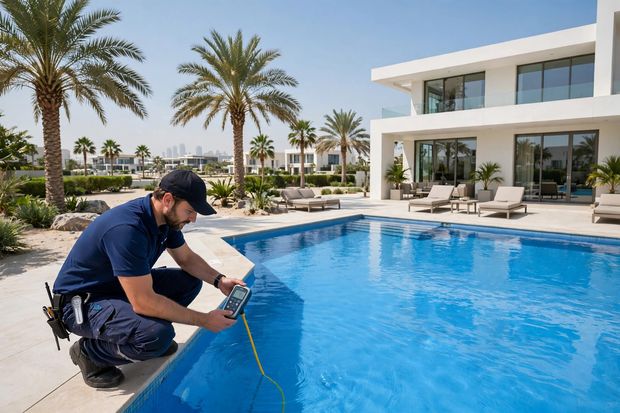
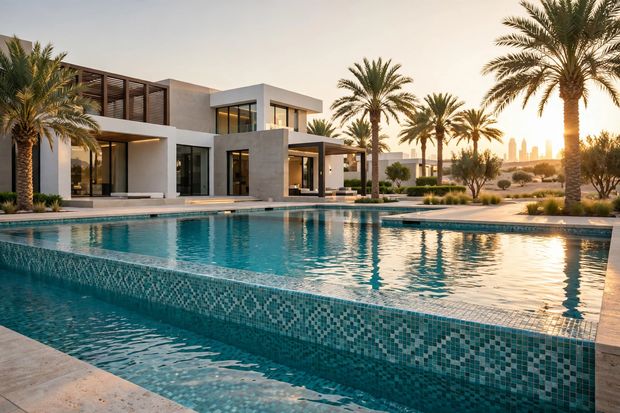
If your villa has a pool, design the garden around it from day one. The pool is the largest feature in the plot, and it sets the mood of the whole garden. Place the decking, the planting and the shade so they frame the water, not fight it. Keep thorny plants and heavy leaf-droppers away from the water edge. Our swimming pool design team plans the pool and the garden together.
Designing for Dubai’s Climate First
Dubai’s climate decides what a garden can be. Summer days often climb above 40 degrees, the sun stays strong for most of the year, and the wind carries dust and sand across open plots. Plants that thrive in a mild climate simply burn here. A garden that ignores these forces will need constant rescue work. Start with the climate, and every later choice gets easier.
The first step is to watch your own plot through a day. Note where the sun falls in the morning and where it burns in the afternoon. Feel where the wind comes from, and see which corners stay hot long after sunset. These notes show you where to put the seating and where a shade tree will pay for itself.
Heat, sun and wind — the three forces
Heat is the hardest force to fight, so design with it, not against it. Place seating and play areas where buildings or trees give afternoon shade. Use pale paving that stays cooler underfoot. South and west walls bake in the afternoon, so they need shade or heat-tolerant planting.
The two-season garden year
Dubai has two gardening seasons, and smart owners plan around both. The golden window runs from October to April, when days are warm and evenings are cool. This is the season for outdoor dining, new planting and colourful bedding. From May to September, the garden switches to survival mode, and only the toughest plants look their best.
The west-facing garden problem
A west-facing garden gets the full force of the afternoon sun. The patio can stay hot until late evening, and plants near the western wall often scorch. Fix this with layers of shade: a pergola over the patio, and a row of trees along the western boundary. Pale stone and light decking help too.
The Plants That Actually Survive Dubai
Walk through any long-established villa garden in Dubai and you will see the same lesson. The plants that look good year after year are the ones that belong in a hot, dry climate. They have small leaves, deep roots or waxy coatings that hold in water. By contrast, the plants that die each summer are usually the ones that need cool nights and soft water. Choosing survivors is not a compromise.
Layer your planting like nature does. Tall trees form the canopy and give shade. Shrubs fill the middle layer and add colour. Ground cover and bedding plants finish the picture at soil level. Plant in groups of three to five of the same species for a calm, designed look.
Trees that give shade and structure
Trees are the backbone of a Dubai garden. The ghaf tree, the national tree of the UAE, gives broad shade and needs little water once established. Date palms add height and a classic Arabian feel, and they suit villa gardens of every size. Frangipani brings scented flowers, while neem gives fast, dense shade.
Shrubs and colour that last all year
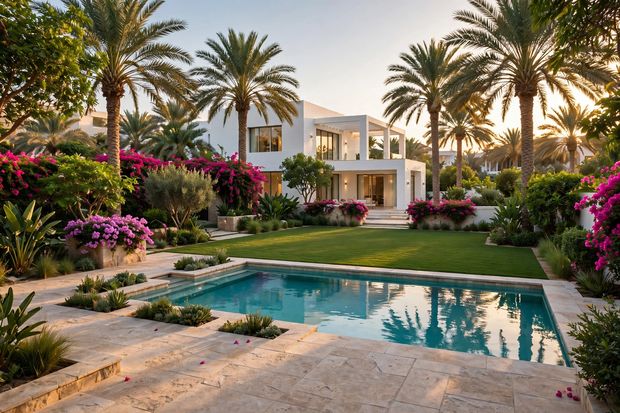
Shrubs carry the colour of a Dubai garden through the year. Bougainvillea is the star, with bright flowers in pink, purple, orange and white that last for months. Desert rose suits hot, sunny spots and flowers with almost no fuss. Ixora, lantana and rosemary add colour and scent all year.
Ground cover and bedding plants
Ground cover plants do quiet, useful work. They shade the soil, cut evaporation and stop weeds from taking hold. Succulents are ideal for hot, sunny beds, because they store water in their leaves and ask for almost nothing. Jasmine gives scent near paths, while petunias and marigolds bring bright colour from October to March.
Plants to avoid — banned and thirsty species
Some plants cause real trouble in Dubai, and two are banned for good reason. Conocarpus and Ficus Microcarpa have aggressive roots that crack pipes, lift paving and damage foundations. Several communities fine owners who plant them, and removing a mature tree later is costly. Avoid them completely, even if a nursery offers them cheaply.
Soil, Mulch and Planting: Building the Base
Most new villa gardens in Dubai sit on sand, and sand alone grows almost nothing. It drains too fast, holds almost no nutrients, and heats up quickly in the sun. The fix is simple, yet many gardens skip it. Before you plant anything, mix compost and organic matter into the soil, and add a layer of good topsoil where the beds will sit.
Planting at the right time matters just as much as the soil. The best window runs from October to March, when the days are warm and the nights are cool. Plants put down roots quickly in this season, and they face the summer with a strong root system behind them. Planting in mid-summer forces a young plant to fight the heat before it has settled in.
Fixing sandy soil the right way
Dig the planting beds to a good depth and mix compost through the sand. Compost adds the nutrients that sand lacks, and it helps the soil hold water for longer. Add a layer of sweet soil or planting mix on top, and level it before planting. Test the drainage too: water should soak in steadily, not pool on the surface.
Mulch — the cheapest protection your garden gets
Mulch is a layer of bark, gravel or compost spread over the soil around plants. It shades the soil, cuts evaporation, and keeps the roots cool through the hottest days. It also stops weeds and keeps the beds looking tidy. Spread it 5 to 8 centimetres deep.
Planting at the right time of year
Trees and shrubs go in from October onwards, so they root well before summer. Seasonal colour goes in during autumn too, for a long winter display. New lawns establish best in the cooler months, when the grass can root without heat stress.
Lawns in Dubai: Real Grass, Artificial Turf or No Lawn at All
A lawn is the part of the garden that children and pets love most, and it is also the part that causes the most debate. Real grass feels wonderful underfoot, yet it needs water, mowing and care through the year. Artificial turf stays green in August with no watering, yet it heats up in the sun and never feels quite like grass. A third option, no lawn at all, suits owners who want a low-care garden.
Before you choose, look at the lawn area honestly. Does it get at least six hours of sun a day? Will children play on it daily, or will it sit mostly unused? A sunny, well-used lawn justifies real grass. A small, shaded strip that no one walks on does not. Our artificial grass installation team can show you samples in your own garden.
Paspalum and other warm-season grasses
For real grass in Dubai, Paspalum is the usual choice, and for good reason. It is a warm-season grass that loves heat, tolerates salty water, and stays green through the summer. It handles foot traffic well, which suits family gardens. With steady care, a Paspalum lawn can look superb for most of the year.
Artificial turf — the honest pros and cons
Artificial turf has one great strength: it looks green all year with no watering, mowing or feeding. It suits small gardens, shaded corners and roof terraces where real grass would fail. The drawbacks are real too: turf gets hot in direct sun, and it needs brushing and cleaning, because dust and leaves collect on it.
Gravel and ground-cover alternatives
A third option skips the lawn completely. Decorative gravel, stepping stones and tough ground-cover plants can look smart and need almost no care. This style suits modern villas, small plots and owners who want a garden that looks after itself. Mix gravel beds with planting pockets, so the garden still feels green and alive.
Irrigation That Waters Plants, Not Pavements
Irrigation is the quiet system that decides whether a Dubai garden lives or dies. The heat means plants need steady water, yet wasted water is the most common fault we see. Sprinklers spray the pavement, drip lines water empty beds, and timers run at noon when half the water evaporates. A good system puts the right amount of water at the roots of each plant, at the right time of day, and nowhere else.
Plan the irrigation with the planting, not after it. Trees need deep, slow watering. Lawns need even coverage. Pots need small, frequent doses. A single timer running everything at once cannot serve them all well. Instead, divide the garden into zones by water need, and give each zone its own timing. Our irrigation system team designs every system this way.
Drip vs sprinkler — where each belongs
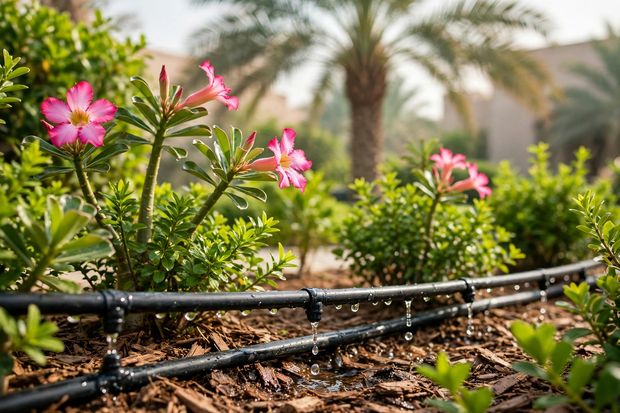
Drip irrigation is the best choice for beds, shrubs, trees and pots. It delivers water slowly, straight to the root zone, with almost no waste. Sprinklers belong on lawns, where even coverage matters more than precision.
Zoning by water need
Zoning means grouping plants that need similar amounts of water. Put the thirsty plants together, the moderate plants together, and the drought-tolerant plants together. Each group then gets its own valve and its own schedule. This stops one schedule drowning the succulents while the lawn stays thirsty.
Smart controllers and DEWA watering times
A smart controller is worth its place in any Dubai garden. It adjusts the watering to the weather, skips a cycle after rain, and runs each zone for the right length of time. You can control it from your phone, even while you travel. Water early in the morning, before 8am, or in the evening, after 6pm, when evaporation is lowest.
Dubai’s hard water and what it does to irrigation
Dubai’s water carries a high mineral load, and that affects irrigation over time. The minerals leave white scale on emitters and inside pipes, and they can block drip lines if nothing is done. Fit a filter at the head of the system, and flush the lines from time to time. Clean the emitters once a season.
Hardscape: Paths, Patios and Pool Surrounds
Hardscape means the built parts of the garden: the paths, the patios, the walls and the pool surround. These parts shape how the garden feels and how it is used, and they last far longer than any plant. A well-built patio invites the family outside. A poor one cracks, holds water or burns bare feet.
Think about movement first. How do people walk from the gate to the front door, from the kitchen to the patio, and from the patio to the pool? Each route needs a clear, comfortable path. Paths should be wide enough for two people, with a smooth, non-slip surface. Steps should be even and easy to see at night.
Materials that stay cool underfoot
Material choice matters more in Dubai than in a mild climate. Dark stone and dark tiles store heat and can burn bare feet by midday. Pale limestone, light porcelain and sand-coloured pavers stay cooler and look bright in the sun. Whatever you choose, test a sample in the afternoon sun before you commit.
Pool decking that works with the landscaping
The pool deck is the busiest surface in the garden, so it needs care. It must be non-slip when wet, cool underfoot, and tough enough for daily use. Light-coloured stone and porcelain are popular choices, and timber-look decking suits a resort style. Keep the deck level with the patio. Our swimming pool construction team builds the pool shell and the deck as one job.
Drainage — the detail everyone forgets
Drainage is the detail that separates a good garden from a flooded one. Dubai rain is rare, yet it can be heavy when it comes. A garden with no drainage turns into a pond within minutes. Slope every patio and path gently away from the house, towards a drain or a planted bed.
Shade Structures: Pergolas, Sails and Planted Shade
Shade is what turns a Dubai garden from a place you look at into a place you live in. Without it, the patio is empty from May to September. With it, the family eats outside, the children play safely, and the pool area stays usable through the hottest months.
There are three kinds of shade, and the best gardens mix them. Built shade, such as pergolas and gazebos, gives instant, reliable cover. Fabric shade, such as sails, is light and flexible. Planted shade, from trees and climbers, grows more beautiful every year. Our pergola construction team and our gazebo construction team build both styles to suit the villa and the garden.
Pergolas and gazebos
A pergola is a roof of beams over a patio or a walkway, and it is the most popular shade structure in Dubai villa gardens. It cuts the direct sun while letting air move freely, so the space below stays cool. Add a retractable fabric cover for full shade in summer, and open it in winter to let the sun in.
Shade sails
Shade sails are large pieces of fabric stretched between posts or walls. They suit gardens where a solid roof would feel too heavy, and they can cover odd shapes that a pergola cannot. They are also easy to take down in winter, when you want the sun back. The key is the fixing: each corner needs a strong anchor, and the fabric must be tight, so it does not flap in the wind.
Planted shade that grows with the garden
Planted shade is the slowest kind, yet it is often the most beautiful. A ghaf or neem tree gives deep, natural shade within a few years, and it cools the air around it as well as blocking the sun. Climbers on a pergola, such as jasmine or bougainvillea, turn a plain frame into a flowering roof.
Lighting the Garden After Dark
A garden that is dark after sunset is a garden that is used for half the year. Good lighting changes that completely. It lets the family dine outside on a winter evening, it makes the pool glow, and it shows the trees and the water feature at their best. It also makes the garden safer, because steps, paths and the pool edge are easy to see.
Plan the lighting with the design, because the cables and the fittings need to go in before the paving and the planting. Walk the garden at night in your mind. Where do people walk, and which tree deserves a highlight? Our guides to backyard landscape lighting ideas and how to design landscape lighting explain the layering in more detail.
Layered lighting — path, feature and pool
Layered lighting means three kinds of light working together. Path lights mark the routes, so no one trips in the dark. Feature lights highlight one tree, one wall or one water feature, and they give the garden depth. Pool lights turn the water into the centrepiece of the evening garden. Use warm white light throughout, and keep the brightness low.
Solar vs low-voltage lighting
Solar lights need no cables, so they are easy to add anywhere. They suit paths and small features, and they cost nothing to run. Their weakness is brightness and reliability, because they depend on the sun they stored during the day. Low-voltage lights run on a transformer and a buried cable, and they suit feature and pool lighting.
Light, neighbours and community rules
Good lighting respects the neighbours. Keep the lights low and aimed down, so they light your garden and not the villa next door. Avoid bright floodlights on boundary walls, because they shine straight into other homes. Check your community rules too, because some communities limit the brightness or the hours of garden lighting.
Water Features and the Pool-Garden Connection
Water brings a garden to life. The sound of a small fountain calms the mind, a rill draws the eye along a path, and a spillover links the pool to the planting in a way that nothing else can. Yet water needs planning: a feature that is too big will dominate the garden, and one that is too small will look lost.
The pool is the largest water feature in most villa gardens, so design the smaller features to work with it, not against it. A spillover from a raised wall into the pool links the two together and adds movement. A fountain near the patio gives sound without competing with the pool. Each one needs its own pump and care, so keep the number of features small. For the budget side of a new pool, see our guide to swimming pool cost in Dubai.
Fountains, rills and spillovers
Fountains suit entrance courtyards and patio corners, where their sound welcomes guests. Choose a simple design in stone or tile, with a shallow basin that is easy to clean. Rills are narrow, shallow channels of still or slow-moving water. They suit modern gardens, where they add reflection and calm.
Designing the garden around the pool
Start with the pool, then build the garden outwards. Place the main seating where it looks across the water, not away from it. Frame the pool with low planting that softens the edges without blocking the view. Use the same stone on the deck and the patio, so the two areas feel like one space. Our swimming pool design in Dubai guide shows how the pool shape and the garden shape work together.
Keeping garden water out of the pool
Garden water and pool water must stay separate, or the pool will suffer. Soil, fertiliser and leaves all upset the pool chemistry and cloud the water. Keep planting beds a step above the pool deck, so rain and irrigation water run away from the pool, not into it. Fit a channel drain between the beds and the deck. Our swimming pool cleaning team sees the difference every week.
Garden Maintenance Through the Year
A beautiful garden is not a one-time project. It is a living thing, and it needs steady care through the year. The good news is that the care is simple when the garden is designed well.
The rhythm changes with the seasons. Winter is the busy season, when the garden grows fast and the family uses it most. Summer is the survival season, when the goal is to keep the plants healthy and the water use sensible. Our garden maintenance team follows the same rhythm across Dubai, from Emirates Hills to Jumeirah.
The monthly rhythm — summer vs winter
From October to April, the garden grows fast: mow weekly, feed the plants, and plant the seasonal colour. From May to September, slow down. Mow less often, water early or after 6pm, and leave heavy pruning for autumn.
Pruning, feeding and pest watch
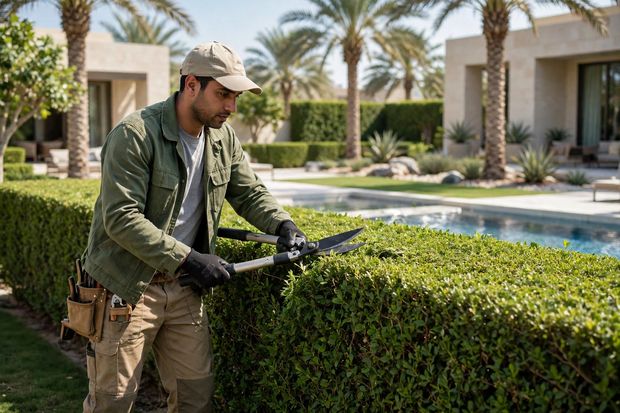
Prune with a purpose, not by habit. Remove dead wood, open the centre of shrubs for air, and shape hedges lightly and often. Feed the garden in the cooler months, when the plants can use the nutrients. Watch for pests every week, especially on the undersides of leaves.
When to call a professional
Some jobs are best left to a professional. A tree that needs heavy pruning, a palm that needs a tall ladder, or an irrigation fault that you cannot trace are all good reasons to call for help.
Community Rules, Approvals and What to Check Before You Build
Every Dubai community has rules about what you can build and plant in your garden, and they are easy to overlook until a neighbour complains or a fine arrives. The rules cover heights, boundaries, drainage, trees and structures. They exist for good reasons: to protect the look of the community, to keep drains clear, and to stop one garden from damaging the villa next door. Check them before you build, not after.
The approval process is usually simple. You submit a sketch or a plan to the community management or the developer, and they confirm it in writing. Small planting jobs rarely need approval, yet walls, pergolas, gazebos, pools and major changes to the levels almost always do.
Developer and community approvals
Start by asking your community management what needs approval. The list usually covers pergolas, gazebos, boundary walls, water features and any change to the drainage or the levels. Submit a simple plan with the sizes and the materials, and wait for the written approval before you order anything.
Banned plants and root damage
Two trees are banned in many Dubai communities for a clear reason. Conocarpus and Ficus Microcarpa have roots that spread far and fast. They crack pipes, lift paving, damage foundations and block drains. Several communities fine owners who plant them, and the fines grow if the tree is left in place.
Boundaries, drainage and setbacks
Keep trees and large shrubs clear of the boundary wall, so their roots and branches never reach the neighbour’s plot. Respect the setback rules, which set how close a structure can sit to the boundary. Check the drainage too, because your garden water must never flow into the neighbour’s garden or onto the street.
Which Villa Garden Suits Your Home? A Simple Decision Guide
By now you have the full picture, so here is a simple way to use it. The right garden depends on your household, your plot and how much care you will give. There is no single best garden for everyone. A family with young children needs a different garden from a couple who travel often.
Whatever style you choose, the same rules hold. Design for the climate first, zone the plot for the way you live, and build the soil and the irrigation before you plant. That order keeps the garden healthy and keeps the care simple.
Match the garden to your household
For a family with children and pets, choose a tough Paspalum lawn, a shaded patio, and hardy plants that forgive a ball or a paw. For a couple who entertain often, choose a large patio, a pergola, layered lighting and a water feature near the seating. For owners who travel, choose artificial turf or gravel, drought-tolerant plants, and drip irrigation with a smart controller. For a pool household, design the garden around the pool, with a cool deck and shade over the seating.
Your next step — a free site visit
Book a free site visit and let a designer look at your garden. They will walk the plot with you, check the sun, the soil and the drainage, and talk through the garden that fits your household. You will get a clear plan and honest advice on plants and materials. Call +971 50 866 5595, message Hello Landscaping & Pools LLC on WhatsApp, or visit hellolandscapingllc.com to book your visit.
Frequently asked questions
Design, plants and lawns
What is the best time of year to start a villa garden in Dubai?
The best time to plant is from October to March, when the days are warm and the nights are cool. Plants root quickly in this window, and they face the summer with a strong root system. You can design at any time of year, yet planting should wait for the cooler months.
Which plants survive the Dubai summer best?
Ghaf trees, date palms, bougainvillea, desert rose, ixora, lantana, frangipani and succulents all cope well with the heat. They have small or waxy leaves, deep roots, or water stored in their leaves. Avoid plants that need cool nights, daily misting or soft water, because they will struggle here every summer.
Is real grass or artificial turf better for a Dubai villa?
Real grass, such as Paspalum, feels best underfoot and suits sunny, well-used lawns. Artificial turf stays green all year with no watering or mowing, and it suits small or shaded areas. The choice depends on how you use the lawn, how much sun it gets, and how much care you will give it.
Which trees are banned in Dubai villa communities?
Conocarpus and Ficus Microcarpa are banned in many communities, because their roots crack pipes, lift paving and damage foundations. Several communities fine owners who plant them. Always check the banned list for your own community before you plant any tree, because the list can change.
When should I water my garden in Dubai?
Water early in the morning, before 8am, or in the evening, after 6pm. These are the hours when evaporation is lowest and the water reaches the roots. Watering at noon in summer wastes much of the water before it ever reaches the soil.
Costs, rules and care
How much does villa landscaping in Dubai cost?
The figure depends on the size of your plot, the materials you choose, and the scope of the work. No two gardens cost the same, so a fair quote needs a site visit first. Message Hello Landscaping & Pools LLC on WhatsApp or call +971 50 866 5595 to book a free site visit.
Do I need approval to landscape my villa garden?
Small planting jobs rarely need approval. Walls, pergolas, gazebos, pools, water features and changes to levels or drainage almost always do. Ask your community management what needs approval, submit a simple plan, and wait for the written approval before you build.
How do I keep my garden looking good in summer?
Rely on tough, heat-loving plants, mulch the beds, and water early in the morning or after 6pm. Let the lawn grow a little longer, and leave heavy pruning for autumn. Shade the seating and the young plants, and check the irrigation weekly for blocked emitters or leaks.
Can I have a lawn and a swimming pool in the same garden?
Yes, and many Dubai villas do. Keep the lawn clear of the pool edge, use drip irrigation near the water, and fit a channel drain between the beds and the deck. Choose plants that drop few leaves near the pool, so the water stays clean with less work.
How often does a villa garden need professional maintenance?
Most villa gardens need a visit every week or two in the cooler months, and a lighter rhythm in summer. A regular visit covers mowing, pruning, feeding, irrigation checks and pest watch. If you travel often, keep the visits running while you are away.