

Fiberglass vs Concrete Pools in Dubai: Which Should You Build?
Every villa owner who plans a pool in Dubai reaches the same fork in the road. Do you choose a fiberglass shell, made in a factory and lowered into the ground, or a concrete pool, built and shaped on site? Both cool a family through the long summer. Both can look superb. Yet they differ in build time, care, lifespan, and how they cope with Dubai heat, sand, and hard water. The right choice depends on your plot, your household, and how you plan to use the pool.
At Hello Landscaping & Pools LLC, we build both types across Dubai, from Palm Jumeirah to Arabian Ranches and Dubai Hills Estate. So we see the strengths and limits of each type every week. This guide compares them in plain language: the build, the climate, the care, and the long-term value. For advice on your own garden, call +971 50 866 5595 or message Hello Landscaping & Pools LLC on WhatsApp for a free site visit.
The Short Answer: Which Pool Suits Your Villa?
If you want a pool fast, with a smooth surface and simple weekly care, fiberglass usually wins. The shell arrives ready-made, the build takes weeks rather than months, and the gelcoat resists algae well. If you want a pool shaped to your exact garden, with an infinity edge or a beach entry, concrete usually wins. A concrete pool can take almost any shape, and it suits villas where the pool is the centrepiece.
Most owners fall into one of those two groups. A family that wants to swim this season often picks fiberglass. An owner who plans a full garden redesign often picks concrete. Neither choice is wrong. The mistake is to pick a type before you know your soil, your access, and your long-term plans. A free site visit answers those questions before you commit.
The decision in one paragraph
Choose fiberglass when speed, smooth water care, and a proven shape matter most. Choose concrete when shape, size, or features matter more than speed. The builder matters as much as the shell. A good fiberglass install needs a sound base and level setting. A good concrete pool needs sound steel, curing, and waterproofing.
When fiberglass wins
Fiberglass wins when the garden suits a standard shape, the access allows a truck and a crane, and the family wants to swim soon. It also wins for owners who want low weekly effort. The smooth gelcoat gives algae little to grip, so brushing and chemical use stay light.
When concrete wins
Concrete wins when the garden demands a custom shape. A long lap pool, an L-shaped pool, or a pool with a raised spa all need concrete. If you plan to stay in the villa for many years and want the pool to match the house exactly, concrete gives you that freedom.
What Is a Fiberglass Pool? How a Factory Shell Becomes Your Pool
A fiberglass pool starts life in a factory, not in your garden. Workers build a mould in the shape of the pool, then layer fiberglass, resin, and a gelcoat finish inside it. The gelcoat is the smooth skin you swim against. Once the shell cures, the factory lifts it from the mould, checks it, and loads it onto a truck. Your garden receives one complete pool, ready to set into a prepared hole.
That factory start is both the strength and the limit of fiberglass. The shell arrives with a consistent finish, made in controlled conditions. Yet the pool can only be as large as the road allows. A shell must travel by truck and lift by crane, so width, length, and road access set the limits. Our guide to the types of swimming pools explains where fiberglass sits among the other options.
How the shell is made
The mould defines the shape, the steps, the seats, and the depth. Layers of fiberglass mat and resin build the strength, while the gelcoat gives the smooth, watertight finish.
What arrives on site
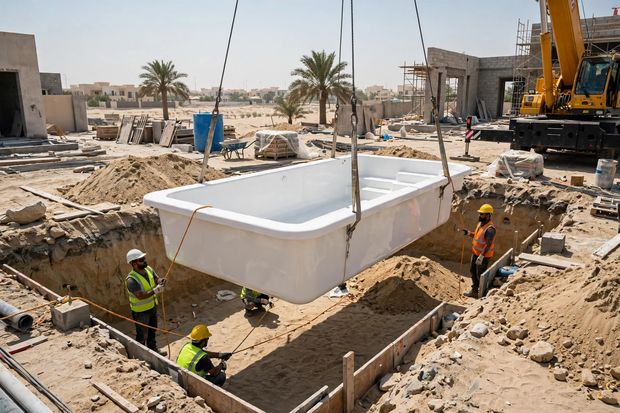
On delivery day, a truck brings the shell and a crane lifts it over the wall into the excavation. The crew sets it on a level base, checks it with a spirit level, and backfills around it with care. The pool fills with water while the backfill rises, so pressure stays even on both sides.
Size limits set by the road
Road width, gate width, and turning space decide which shells can reach your villa. A wide shell may not pass a narrow community road or a tight villa gate. In Emirates Hills and Jumeirah, older streets can be narrow, so check access before you order. If the shell cannot reach the garden, concrete becomes the practical choice.
What Is a Concrete Pool? Built on Site, Shaped to Your Garden
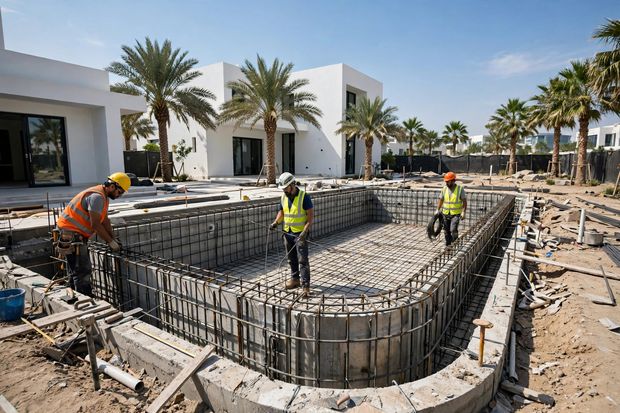
A concrete pool is built where it will sit. The crew digs the hole, fixes steel bars into a cage, and sprays or pours concrete around them. The shell then cures, gets a waterproof coat, and receives its finish: tile, plaster, or pebble. Nothing arrives ready-made. Each step happens in your garden, and each step can adapt to the plot.
That on-site build is why concrete suits custom villas so well. The pool can follow the boundary, wrap around a patio, or step down in levels. It can carry heavy features, such as an infinity edge or a raised spa, without a factory mould. The trade-off is time. Concrete needs curing, and each stage must finish well before the next begins.
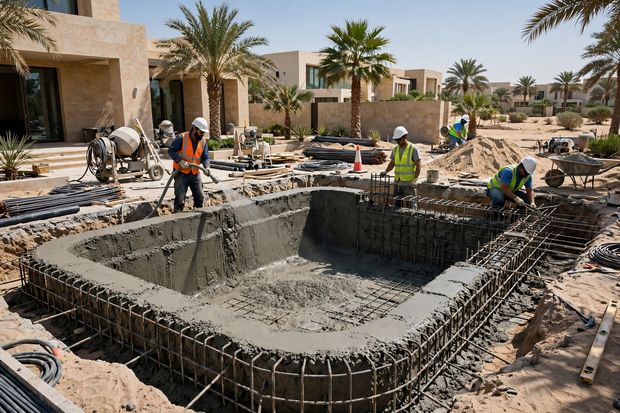
Shotcrete and poured concrete
Most Dubai concrete pools use shotcrete: concrete sprayed at high speed onto the steel cage. The spray packs the concrete tight and lets the crew shape curves and steps by hand. Poured concrete, set in formwork, suits straight walls. Both methods work well when the mix, steel, and curing are right.
Steel, waterproofing and curing
Steel gives the shell its strength, so the bars must sit at the right spacing and depth. Curing decides long-term strength. The concrete must stay damp while it hardens, so it gains full strength and resists cracks.
Why curing time matters in Dubai heat
Dubai heat speeds up the surface drying of fresh concrete, which can weaken it if the crew does not keep it damp. Good builders shade the shell, wet it on a schedule, and allow full curing time. Rushing this stage saves days now and can cause cracks later. Ask your builder how they cure in summer.
How Each Pool Is Built, Step by Step
The build sequence differs so much that it is worth seeing side by side. A fiberglass build moves fast once the hole is ready, because the pool arrives finished. A concrete build moves in stages, because each layer must set before the next begins. Both need the same early steps: a survey, a design, permits, and a marked-out excavation. Our guide to the swimming pool construction process in Dubai walks through those early stages in detail.
Access shapes both builds, in different ways. Fiberglass needs a clear route for a truck and a crane, plus room to lift the shell over the boundary. Concrete needs steady access for mixers, pumps, and deliveries over several weeks. A tight plot can suit one route better than the other. A site visit will show which one fits.
The fiberglass build sequence
First, the crew surveys the plot, checks the soil and water table, and marks out the hole. Next, they dig, level the base, and lay a sand or gravel bed. Then the crane lifts the shell in, the crew levels it, and they connect the pipes and fittings.
The concrete build sequence
First, the crew surveys, designs, and digs the hole, just as with fiberglass. Next, they fix the steel cage and plumbing, then spray or pour the concrete shell. After that, the shell cures, receives waterproofing, and takes its tile or plaster finish. Finally, the crew fits the equipment, fills the pool, and finishes the deck and coping.
What your garden looks like during the build
A fiberglass build keeps the garden messy for a shorter time, yet the crane day is dramatic: a large shell passes over the wall, and the garden needs clear space. A concrete build keeps the garden busy for longer, with mixers and spray equipment coming and going. Plan where materials will sit, protect the plants you want to keep, and agree the access route first.
Build Time and Disruption: Weeks or Months?
Time is often the deciding factor, and here the two types differ clearly. A fiberglass pool can be ready to swim in weeks once the shell arrives, because the factory has done the slow work. A concrete pool takes longer, because the shell must be built, cured, waterproofed, and finished on site. The timeline depends on size, features, and permits, which apply to both types.
Do not judge a build only by the swimming date. A fast build that skips curing or backfill checks can cause trouble later, while a slower build with sound stages can last for decades. Ask for a written schedule that lists each stage, and check what happens if a stage runs late. A builder who plans for rain, heat, and inspections finishes well.
The fiberglass timeline
Once permits are in hand, the hole takes a few days, the shell sets in a day, and the backfill, plumbing, and deck follow over the next weeks. The shell is made while the permits run, so factory time overlaps with the paperwork. Weather rarely stops a fiberglass build for long, because the main work happens fast.
The concrete timeline
Concrete needs more calendar time, even when the crew works well. Digging and steel take days, the shell takes days to spray or pour, and curing takes longer still. Waterproofing and tiling follow, each with its own drying time. A complex pool adds more stages. Plan for months, not weeks.
Living in the villa during the build
Most families stay in the villa during either build. Fiberglass suits families who want the disruption over fast, with one big crane day and a short finishing period. Concrete suits families who can live with a longer, steadier site.
Design Freedom: Shapes, Sizes and Features
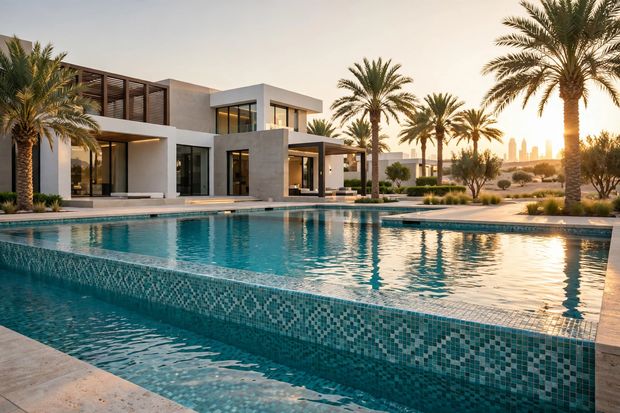
Design freedom is where concrete pulls ahead. A concrete pool can be any shape that fits the plot: rectangular, L-shaped, freeform, or curved around a tree. It can be any depth, from a shallow sun shelf to a deep end. Fiberglass offers the shapes the factory makes. Those shapes are good and proven, yet they are fixed.
Features follow the same pattern. A concrete pool can carry an infinity edge, a beach entry, a raised spa, and a swim-up bar, because each feature is built into the shell. A fiberglass pool can carry many of the same features, yet only where the mould includes them. If you picture a special pool, take it to a designer early and ask which type can build it.
What fiberglass can and cannot do
Fiberglass offers a strong range of shapes, from classic rectangles to freeform curves, with built-in steps, seats, and sun shelves. What it cannot do is change shape on site. You cannot widen a shell or deepen one end after the mould is set. If your garden needs an unusual shape, fiberglass will not stretch to fit it.
What concrete makes possible
Concrete makes almost any shape possible, and it suits pools that must fit a tricky plot. It can run along a boundary, step around a patio, or sit on two levels with a spillover. Our swimming pool design team often starts with the garden, not the pool, and shapes the concrete to match it.
Infinity edges, beach entries and spas
An infinity edge needs precise levelling and a balance tank, and concrete handles both with ease. A beach entry needs a gentle, even slope, which a concrete crew can shape by hand. A raised spa needs a strong, watertight wall, which concrete provides. Check the mould list before you decide.
How Each Pool Handles Dubai’s Climate
Dubai tests every pool in ways a mild climate never does. Summer heat pushes water temperatures high, the sun beats on the surface and the deck, and dust settles on the water after every windy day. Below ground, sandy soil shifts, and the water table can rise after heavy rain. A pool that copes well here needs the right shell, base, and finish.
Both types can last well in Dubai when built for it. Fiberglass flexes slightly with ground movement, which helps in sandy soil. Concrete stays rigid, which helps it hold a precise shape and carry heavy features. The difference lies in how each meets the risks: heat, movement, hard water, and scale. A builder who knows Dubai soil will plan for all four.
Heat, UV and expansion
Heat expands every material, and a pool shell must cope with that daily cycle. Fiberglass expands and contracts a little with temperature, and its gelcoat resists UV well when made to a good standard. Concrete expands less, yet it needs the right joints and curing to avoid cracks.
Shifting sand and the water table
Dubai soil is mostly sand, and sand can shift when it gets wet or when heavy loads pass nearby. A fiberglass shell needs a firm, level base and careful backfill, so it cannot float or tilt if groundwater rises. A concrete shell needs sound steel and a good base too, so it holds its shape as the ground moves.
Hard water, scale and surface wear
Dubai water carries a high mineral load, and that leaves scale on pool surfaces over time. The smooth gelcoat of a fiberglass pool shows less scale and cleans with a soft brush. For more on water care, see our guide to saltwater vs chlorine pools in Dubai.
Maintenance and Water Care Compared
Weekly care is where fiberglass earns its reputation. The smooth gelcoat gives algae little to grip, so brushing is light and chemical use stays steady. A quick brush, a skim, and a water test keep it clear most weeks. Concrete pools need more brushing, because tiles, grout, and plaster give algae and scale more grip. That extra effort is small each week, yet it adds up across a year.
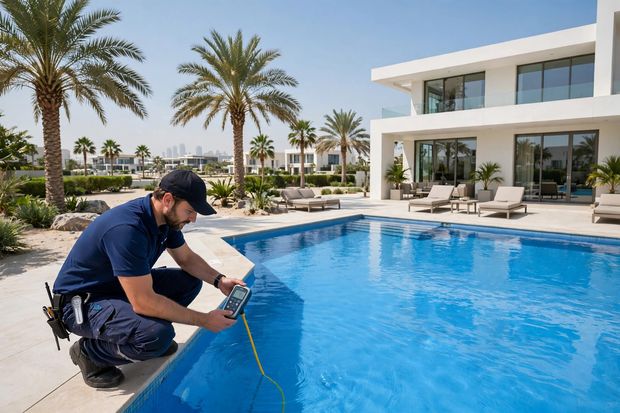
Both pools need the same basics: a pump that runs enough hours, a clean filter, balanced water, and a regular visit from a professional. The difference is in the surface work, not the water care. If you care for the pool yourself, fiberglass will feel easier. If you use a swimming pool maintenance team, the difference matters less, because the team handles the brushing.
Algae and the smooth gelcoat
Algae needs a rough surface to hold on to, and gelcoat offers almost none. A fiberglass pool therefore stays clear with less brushing, and it recovers fast after a dust storm or a busy weekend. The gelcoat still needs care. Avoid harsh brushes and strong cleaners, which can dull the finish.
Grout, tiles and brushing
A tiled concrete pool needs a firm brush on the grout lines, the waterline, and the steps, where algae and scale settle first. Plaster finishes need a softer touch, because hard brushing can wear the surface. The work is simple, yet it must happen every week in summer.
Saltwater systems on each surface
Saltwater chlorinators work on both pool types, and many Dubai owners choose them for the softer feel. On fiberglass, check that the fittings and gelcoat suit salt water, and rinse metal parts after use. On concrete, salt water needs sound waterproofing and good grout, because salt can wear a weak finish.
Lifespan and the Renovation Question
Both pool types can serve a villa for decades, yet they age in different ways. A fiberglass shell keeps its shape and strength, while its gelcoat slowly fades and may need a recoat after many years. A concrete shell also lasts for decades, while its tile or plaster finish wears sooner and needs renewal. Shell and surface age on different clocks, so plan for both.
Renovation is the real test of a pool type. A concrete pool can be retiled, replastered, reshaped in part, and fitted with new features. A fiberglass pool can be recoated and refitted, yet its shape stays fixed. If you may want a new look or shape in fifteen years, concrete gives you more options. Our swimming pool renovation team sees both types, and the concrete jobs usually offer the wider scope.
Gelcoat recoating
After many years of sun and chemicals, a gelcoat can fade, chalk, or show fine cracks. A recoat restores the colour and the smooth finish, and it gives the pool a fresh start. The work needs a dry shell and a clean surface, so it usually happens in the cooler months.
Retiling and resurfacing concrete
A concrete pool can be retiled with a new colour or style, replastered, or given a pebble finish. The crew drains the pool, checks the shell, repairs any weak spots, and applies the new finish. See our guide to swimming pool renovation in Dubai for the signs and the process.
Which pool ages more gracefully
A well-built concrete pool ages gracefully, because each part can be renewed in turn: tiles, coping, equipment, and deck. A well-built fiberglass pool also ages well, yet its renewal options are narrower, because the shape stays fixed. Concrete offers more ways to refresh the pool without starting again.
What Drives the Cost of Each Pool — Without the Guesswork
Every owner asks what a pool will cost. Every honest answer starts the same way: it depends. Size, depth, shape, finish, features, access, soil, and permits all move the figure. No two villas share the same mix. A small, simple pool on an easy plot will always differ from a large, custom pool with an infinity edge and a raised spa. A fair quote needs a site visit first, not a guess from a website.
Competitors often publish a single figure for each type. That figure misleads more than it helps. It hides the soil work, the access, the finish, and the equipment, all of which change the real figure. This guide takes a different path. It shows what drives the figure, so you can compare quotes like-for-like and ask the right questions. For an exact quote on your plot, message Hello Landscaping & Pools LLC on WhatsApp or call +971 50 866 5595 to book a free site visit.
The cost factors, not figures
For fiberglass, the main factors are the shell size and model, the crane and transport, the excavation, and the deck finish. For concrete, the main factors are size and shape, steel and concrete, waterproofing, and the tile or plaster finish. Both share the same other factors: permits, developer approval, equipment, heating and cooling, lighting, and landscaping.
Running costs over the years
Running costs depend on how you use the pool, not only on its type. Pump hours, heating and cooling, chemicals, and cleaning visits shape the monthly picture. Fiberglass often uses slightly fewer chemicals, because its smooth surface resists algae. See our guide to swimming pool cost in Dubai for the factors in full.
Resale value and buyer preference
A good pool adds appeal to a villa, whichever type it is. Buyers judge it by its condition and its fit with the garden. A clean, well-kept fiberglass pool with a neat deck appeals to buyers who want low effort. A striking concrete pool with an infinity edge appeals to buyers who want a showpiece. Sound paperwork, a clean finish, and working equipment matter more than the shell type alone. Vinyl liner pools, by contrast, are rare in Dubai, because the liners cope poorly with intense sun and heat, and buyers here seldom ask for them.
Permits, Access and Approvals: The Same Rules for Both
Permits apply to both pool types in the same way. A new pool in Dubai needs approval before work starts, whichever shell you choose. The rules cover the structure, safety, drainage, and effect on the villa and community. A builder who handles permits well will save you time and trouble. A builder who skips them can cause fines, delays, and resale problems.
The approval stack has three layers: Dubai Municipality, the developer or community, and the utility clearances. Each layer checks a different part of the plan, and each needs its own documents. The pool type changes almost nothing here, except for access. A fiberglass shell needs a crane plan, while a concrete build needs a longer delivery schedule. Our guide to the swimming pool permit in Dubai explains each step.
Dubai Municipality approval
Dubai Municipality checks the structural drawings, safety measures, and drainage plan before it approves a pool. Your consultant prepares the drawings, and the builder follows them on site. Inspections happen at set stages, so the build must match the approved plan.
Developer NOC
Most Dubai communities also need a developer NOC, which confirms that the pool fits the community rules. The NOC covers the location, setbacks, fencing, and equipment enclosure. Some communities limit the hours of noisy work, which affects a concrete build more than a fiberglass one.
Crane access for a fiberglass shell
A fiberglass shell needs a crane that can lift it from the truck into the garden, and that lift needs a plan. The crane needs firm ground, a clear swing path, and enough height to pass over the wall or roof. In tight communities, the crane may need a road closure or a timed slot.
Heating, Cooling and Equipment: Does the Shell Matter?
Heating, cooling, and equipment work the same way on both pool types, with only small differences in the fitting. A heat pump, a chiller, a pump, and a filter all sit outside the pool, in the plant room, and connect through pipes that suit either shell. The shell matters only in how the fittings sit in the wall and how water moves through the pool.
Water flow deserves attention in both types. A fiberglass pool has fixed inlet and skimmer positions from the mould, so the builder must set the shell level and true. A concrete pool lets the designer place the inlets, skimmer, and lights exactly where the shape needs them. Good flow keeps the water clear and the chemicals even, whichever type you choose.
Chillers and heat pumps
Dubai summer pushes pool water too warm for comfort, and winter nights can cool it below comfort. A chiller cools the water in summer, and a heat pump can both heat and cool across the year. See our article on whether you need a pool chiller in Dubai for sizing, alternatives, and running tips.
Pumps, filters and automation
The pump and filter do the daily work of keeping the water clear, and automation makes that work simple. A variable-speed pump, a good filter, and a timer or smart controller suit either pool type. Size the pump and filter to the water volume, not to the shell type.
Saltwater chlorinators
A saltwater chlorinator turns salt in the water into chlorine, so the pool stays sanitised with a softer feel. It fits both pool types, and it needs the same care on each. Check the cell, watch the salt level, and rinse the fittings. On a concrete pool, sound waterproofing matters most. On a fiberglass pool, the gelcoat and fittings matter most.
Which Pool Should You Choose? A Simple Decision Guide
By now you have the full picture. Here is a simple way to use it. The right pool depends on your garden, your household, and how you plan to swim. There is no single best pool for every villa in Dubai. A family that wants to swim this summer needs a different answer from an owner who plans a full garden redesign.
Whatever you choose, the same rules hold. Check the soil and the water table, check the access, and check the permits before you commit. Then pick the builder who explains each stage clearly and puts it in writing. That care matters more than the shell type alone. It is what keeps a pool sound for decades.
Match the pool to your household
For a family that wants a pool soon, with simple care and a smooth surface for children, fiberglass is often the best fit. For an owner who wants a custom shape, an infinity edge, or a beach entry, concrete is often the best fit. For a villa in Palm Jumeirah or Dubai Hills Estate with a wide, open garden, either type can work well, so the shape and the features should decide. For a tight plot with narrow access, concrete often wins, because it needs no crane lift.
Your next step — a free site visit
Book a free site visit and let a designer look at your garden. They will check the soil, the access, the sun, and the space for the pool. They will talk through the type that fits your villa. Call +971 50 866 5595, message Hello Landscaping & Pools LLC on WhatsApp, or visit hellolandscapingllc.com to book your visit.
Frequently asked questions
Choosing between fiberglass and concrete
Which is better in Dubai, a fiberglass pool or a concrete pool?
Neither type is better for every villa. Fiberglass suits owners who want a fast build, a smooth surface, and simple weekly care. Concrete suits owners who want a custom shape, a large pool, or features such as an infinity edge. The right choice depends on your plot, your access, and how you use the pool. A site visit is the best next step.
How long does each type take to build in Dubai?
A fiberglass pool is usually ready in weeks once permits are in hand, because the shell arrives finished from the factory. A concrete pool takes longer, because the shell must be built, cured, waterproofed, and finished on site. The timeline depends on size, features, and permits, which apply to both types.
Which pool is easier to maintain?
Fiberglass is usually easier to maintain week by week, because its smooth gelcoat gives algae little to grip. A concrete pool needs more brushing, especially along grout lines and at the waterline. Both pools need the same pump, filter, and water care. A professional visit covers the surface work on either type.
Can a fiberglass pool be any shape or size?
No. A fiberglass pool can only be the shape and size the factory makes, and it must fit on a truck and lift by crane into your garden. The range is good, with steps, seats, and sun shelves built in. Yet a custom shape, a very large pool, or an unusual layout needs concrete. Check the mould list and access route before you decide.
Do both pool types need a permit in Dubai?
Yes. A new pool needs Dubai Municipality approval and a developer NOC whichever type you choose. The rules cover structure, safety, drainage, and community conditions. The same documents apply to both. A fiberglass shell also needs a crane plan for delivery day, while a concrete build needs a longer delivery schedule.
Costs, care and lifespan
How much does a fiberglass or concrete pool cost in Dubai?
The figure depends on size, shape, finish, features, access, soil, and permits for your own plot, so no two pools cost the same. A fair quote needs a site visit first. Message Hello Landscaping & Pools LLC on WhatsApp or call +971 50 866 5595 to book a free site visit and get an exact quote.
Which pool lasts longer?
Both types can last for decades when built well. A fiberglass shell keeps its strength, while its gelcoat may need a recoat after many years. A concrete shell also lasts for decades, while its tile or plaster finish needs renewal sooner. Concrete offers more renewal options, because it can be retiled or resurfaced.
Can I add a chiller or a heater to either pool?
Yes. Chillers, heat pumps, and saltwater chlorinators work on both pool types, because the equipment sits outside the pool and connects through pipes. The shell matters only in how the fittings sit in the wall. Size the equipment to the water volume and sun exposure, not to the shell type. Keep the plant room easy to reach.
Can I renovate a fiberglass pool later?
Yes, within limits. A fiberglass pool can be recoated, refitted with new lights and equipment, and given a new deck, yet its shape stays fixed. A concrete pool can be retiled, replastered, reshaped in part, and fitted with new features. If you may want a new shape or look in the future, concrete gives you more options.
Why are vinyl liner pools rare in Dubai?
Vinyl liners cope poorly with Dubai heat and intense sun, and they need replacing more often than a gelcoat or tiled finish. Most Dubai owners and builders therefore choose fiberglass or concrete, which suit the climate and last longer. A liner pool can work in a mild climate, yet it seldom suits a Dubai villa garden.