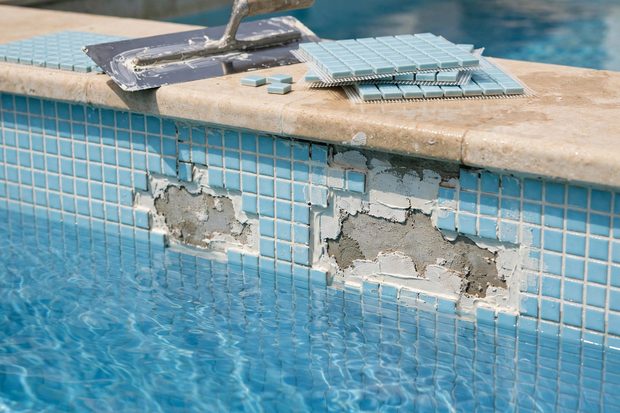


Dubai is hard on swimming pools. The combination of intense UV, summer water temperatures that can sit in the mid-30s, high bather loads in family villas, and year-round use means finishes, grout, coping and equipment all age faster here than in milder climates. A pool that might look fresh for fifteen years elsewhere can start showing its age in eight to ten here — faded waterline tiles, rough plaster, grout that never looks clean no matter how often it is brushed, and equipment that runs longer every summer to achieve less.
This guide explains how to tell when your pool needs renovation rather than another repair, what the renovation process actually involves, how to choose the new finish and equipment, and which factors move the cost up or down. It ends with the questions owners ask most. If you already know your pool is due, the fastest route to an exact figure is a site visit — call or WhatsApp us and we will assess the pool in person.
Why Dubai pools age faster than pools elsewhere
It is not one thing; it is the combination. Ultraviolet radiation breaks down grout, sealants and plastic fittings faster than in cloudy climates. Long hot summers keep water warm for months, which accelerates chemical consumption and algae growth, so pumps and filters work harder for more of the year. Many Dubai villas run their pools almost daily, which multiplies wear on finishes and equipment compared with a pool that sits covered for a winter season.
Construction shortcuts compound the problem. Pools built during a rush, with thin waterproofing or minimal curing time, often show their weaknesses within five to seven years: hollow tiles, drummy render, or damp patches on the outer shell. None of this means Dubai pools are badly built as a rule — it means the local conditions punish any weak point sooner, so renovation cycles here are shorter and the quality of the renovation matters more.
The practical consequence is that “wait and see” costs more here than elsewhere. A small grout failure left through one summer becomes a delaminated tile bed by the next; a minor leak left unaddressed undermines the waterproofing around it. If your pool is approaching the eight-to-ten-year mark, or showing any of the signs below, an assessment now is cheaper than a bigger renovation later.
None of this is an argument for the most expensive option at every decision. It is an argument for doing the renovation once, properly, with the waterproofing and preparation the climate demands — because a cheap renovation that fails in three years is the most expensive kind.
The signs your pool needs renovation, not just another repair
A repair fixes a symptom. A renovation addresses the underlying condition. The difference matters because money spent repairing a pool that actually needs renovation is usually wasted — the symptom returns, often worse. These are the signs that point to renovation:
Widespread tile or finish failure. A few loose waterline tiles are a repair. Tiles coming away across whole walls, hollow-sounding patches over large areas, or plaster that is rough, pitted or flaking across the floor all mean the finish system has reached the end of its life.
Stains that do not respond to treatment. Surface stains from metals or organics usually lift with the right chemistry. Stains that persist after proper treatment are often in the finish itself — worn, porous or chemically damaged — and no amount of shocking or scrubbing will fix them.
Grout that never looks clean. Cement grout is porous. After years of heat and chemical exposure it can become so embedded with algae and mineral deposits that it stays dark or patchy whatever you do. Regrouting is possible on its own, but it is often the visible edge of wider finish wear.
Recurring leaks or water loss. A pool that needs topping up far beyond normal evaporation — especially in cooler months when evaporation is low — has a leak. If leaks recur in different places, the waterproofing membrane or the plumbing is failing systemically, and patching individual spots is a losing game.
Equipment that cannot keep up. A pump that runs all day yet the water stays dull, a filter that needs backwashing constantly, or a chlorinator that cannot hold a residual all suggest equipment at the end of its working life — or equipment that was undersized from the start and has finally been outgrown.
An outdated or unsafe surround. Cracked, lifting or slippery coping and decking is both ugly and a safety issue. Coping replacement is often done together with the interior finish because the two meet at the waterline and doing them separately means doing the edge detail twice.
You are renovating the villa anyway. If the house is being remodeled, the garden relandscaped or the outdoor area reworked, doing the pool at the same time shares access, skips and labour costs — and avoids tearing up a new garden later to reach the plant room.
One or two of these in mild form can be handled as repairs. Three or more, or any of them in severe form, and you are looking at renovation. An honest contractor will tell you which; be wary of anyone who prescribes a full renovation for a single loose tile, or a patch repair for a pool that is failing everywhere.
Renovation, repair or rebuild: how to tell which one you need
These three get confused, and the confusion costs people money. A repair fixes a defined fault: a leaking fitting, a broken pump, a section of damaged coping. A renovation strips the pool back to a sound shell and rebuilds the finish, waterproofing, coping and equipment — the pool keeps its shape and structure but everything you see and everything that makes it work is renewed. A rebuild means structural work: breaking out and replacing the shell itself, changing the shape or depth, or fixing a failed structure.
Most Dubai pools that look tired need renovation, not rebuilding. The concrete shell, if it was properly built, lasts decades; it is the finish, the waterproofing and the equipment that wear out. Rebuild territory starts when there is structural cracking through the shell, serious ground movement, or a change of shape or depth — all much rarer, and all much more expensive.
The way to tell is a proper assessment, not a glance from the deck. That means draining the pool (or diving it), sounding the tiles and render for hollow spots, checking the coping and waterline, inspecting the plant room, and pressure-testing the plumbing if leaks are suspected. A contractor who quotes a full renovation without getting into the pool — or at least getting eyes on the shell — is guessing.
As a rule of thumb: if the shell is sound and the shape still suits you, renovation gives you a pool that looks and performs like new for a fraction of rebuild cost. If the shell is compromised or you want a different pool, no amount of refinishing will substitute for structural work.
The renovation process, step by step
Knowing the sequence helps you judge whether a contractor’s plan is complete. A proper renovation follows the same order every time, because each step prepares the next:
Assessment and scope. The pool is inspected drained (or dived), the finish sounded for hollow areas, coping and waterline checked, plant room reviewed, and plumbing tested if leaks are suspected. You agree a written scope: what is being stripped, what is being replaced, what is being kept.
Drain and strip-out. The pool is drained and the old finish removed — tiles chipped off, plaster scabbled back, old grout raked out. This is dusty, noisy work; it is also the step where hidden problems (hollow render, cracked plumbing, failed membrane) reveal themselves.
Repairs to the shell. Any structural defects, cracked fittings or damaged plumbing are fixed now, while everything is accessible. Skipping this step and tiling over problems is the classic cause of renovations that fail early.
Waterproofing. The shell is prepared and a waterproofing membrane applied to the whole interior. This is the single most important step and the one most often skimped on. In Dubai’s conditions — heat, chemicals, year-round water pressure — the membrane is what stands between your new finish and the concrete. Ask what product is specified and what preparation it requires; “we’ll tank it” is not a specification.
New finish. Tiles, pebble or plaster go onto the prepared, waterproofed shell. Waterline tiles, floor and walls are finished, grouted and cleaned.
Coping and surround. Coping stones are set, the deck repaired or replaced, and the waterline detail finished so the pool meets its surround cleanly.
Equipment and commissioning. Plant room equipment is installed or upgraded, the pool is filled, the water balanced, and everything is tested and handed over with documentation.
The order matters because waterproofing must go onto a sound, prepared shell before the finish covers it, and the finish must be complete before the pool is filled. Any contractor who proposes tiling before waterproofing, or filling before the water is ready to be balanced, is cutting corners you will pay for later.
Choosing the new finish: plaster, pebble or tile
The finish is what you see and touch every day, and in Dubai’s climate the choice matters more than it does elsewhere. The three main options:
Plaster (marble plaster / quartz). The smooth, classic pool interior. It is the most affordable option and feels good underfoot, but it is also the softest — in hard water and heavy chemical use it can etch, stain and roughen faster than the alternatives. Expect a shorter life in Dubai conditions, typically needing attention sooner.
Pebble (exposed aggregate). Small pebbles set in cement, then exposed for a textured, natural look. Tougher than plaster, more stain-resistant, and longer-lived — at a higher price. The texture is the trade-off: most people like it, but it is not as smooth as plaster or tile.
Tile (mosaic or porcelain). The premium option and the most common choice for Dubai renovations. Fully tiled pools resist staining, handle chemicals well, and look sharp for years. Mosaic gives the classic shimmering-water look; large-format porcelain gives a modern, minimal finish with fewer grout lines. Tile costs the most upfront and takes longest to install, but it is also the longest-lived and easiest to keep looking good.
Ask every bidder the same questions: what waterproofing system sits under the finish, how the old surface will be prepared, and what the finish warranty covers and excludes. The answers tell you more than the price does.
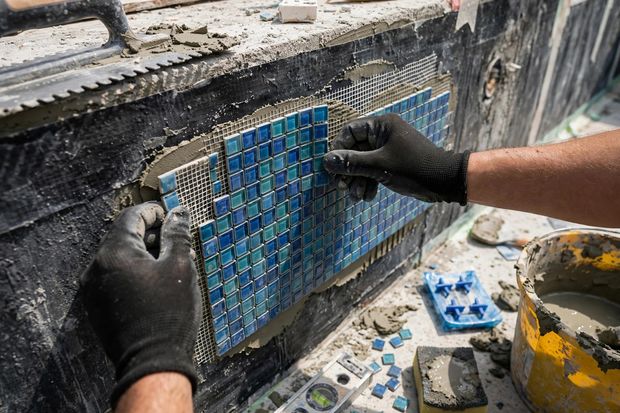
Tiles, coping and deck: the details that change the whole look
People choose a renovation for the interior finish, but what transforms the pool visually is often the detailing around it. Three elements deserve as much attention as the tiles:
Waterline presence. The waterline tile is the most visible part of the pool — it is at eye level whenever you are in the garden. A strong waterline tile, cleanly set with even grout lines, makes the whole pool look crisp even before you notice the floor finish.
Coping. The coping stones cap the pool edge and take constant abuse: heat, chemicals, feet, and cleaning equipment. Natural stone coping looks superb but needs sealing in Dubai’s sun; porcelain coping is tougher and lower-maintenance. Whatever you choose, it must be set level with proper falls so water does not sit on it, and the joint between coping and waterline tile must be waterproofed — this junction is a classic leak path.
Deck and surround. The area around the pool decides how the space feels and how safe it is. Cool, non-slip surfaces matter when the deck hits 50°C underfoot in August. If the deck is being replaced, it is the moment to fix drainage falls, add shading, or run conduits for future lighting — all far cheaper now than later.
These details are also where cheap quotations quietly save money: thinner coping, narrower stones, skipped sealing, or reusing a damaged deck. Compare the specifications, not just the totals.
Upgrading the plant room and equipment
There is little point putting a beautiful new finish on a pool whose equipment belongs to another era. Renovation is the natural moment to renew the plant, because the pool is empty, the plumbing is accessible, and the labour is already on site. The items worth reviewing:
Pump. An old single-speed pump is the most expensive thing to keep. A modern variable-speed pump, correctly sized, typically cuts energy use dramatically because it can run long and slow for filtration instead of short and violent. In Dubai, where pumps run most of the year, the payback is measured in seasons, not decades.
Filter. If the filter is undersized, scarred inside, or so old that media changes no longer restore it, replace it. Clean filtration is what keeps the new finish looking new — poor filtration lets fine dirt settle and stain.
Chlorination. Whether you stay with liquid chlorine dosing or switch to a salt chlorinator, size it for Dubai’s summer demand, not the winter trickle. Many older pools have sanitisers that were marginal from new; renovation is the time to correct that. (There is more on the salt-versus-chlorine decision in our saltwater vs chlorine pools guide.)
Lighting. Old halogen lights are hot, dim and expensive to run. LED retrofits use a fraction of the power, last far longer, and transform how the pool looks at night — which, in a climate where you swim after dark for half the year, matters.
Keep every manual, warranty card and specification sheet. A well-documented plant room is worth money when you sell the villa, and it is essential for anyone maintaining the pool afterwards.
Adding features during renovation
Renovation opens the shell, which makes it the cheapest time to add anything that needs to be built in. Popular additions in Dubai villas:
Underwater LED lighting. The single most transformative addition. If the pool predates LEDs, adding them during renovation means proper niches, conduits and transformers — not surface-mounted afterthoughts.
Water features. Sheer-descent blades, deck jets or a small cascade add movement and sound, and they aerate the water. They need plumbing and sometimes a dedicated pump, which is straightforward while the pool is open and miserable afterwards.
Heating or cooling. A heat pump extends the swimming season through winter; a pool chiller keeps summer water bearable. Both need plant-room space, power and plumbing — plan them now even if you phase the purchase.
Automation. Salt chlorinator, pH dosing, pump scheduling and lighting scenes from one controller. Automation does not replace maintenance, but it smooths out the daily chemistry swings that Dubai’s heat causes.
Plan features at the design stage, not after the shell is sealed. Retrofitting a niche, a conduit or a pipe run through a finished, waterproofed shell is far more expensive than including it on day one.
How long renovation takes, and living with the work
For a typical villa pool — strip, waterproof, retile, new coping, equipment refresh — allow three to six weeks from drain to refill, depending on the finish. Full mosaic tiling takes longer than plaster; extensive coping and deck work adds time; equipment lead times can add more if items are ordered late. A contractor who promises a full renovation in a week is either cutting steps or has not understood the scope.
Curing and filling cannot be rushed. Waterproofing membranes need their specified cure time, grout needs to set, and the pool must be filled promptly once the finish is ready (an empty tiled pool baking in the sun is not good for it). Then the water needs balancing — expect a week or so of careful chemistry before the pool settles.
Living with the work is manageable but not invisible. Strip-out is loud and dusty for several days. Materials and skips need access, which usually means through the garden — agree the route in advance and protect what matters. Water and power will be needed on site. If you work from home, ask which days are the noisy ones.
The best protection against overruns is a written programme with milestones: strip complete, waterproofing complete, tiling complete, fill date. It does not need to be a formal Gantt chart — a one-page sequence with dates, agreed before work starts, is enough to keep everyone honest.
What drives the cost up or down
Renovation quotes vary widely because the scope varies widely. These are the levers that move the number:
Size and depth. More surface area means more stripping, more waterproofing and more finish. Depth matters too — deeper pools need more of everything and are harder to work in.
Finish choice. Plaster is the most affordable, pebble sits in the middle, and full mosaic or large-format porcelain tiling costs the most — but lasts longest. The finish is usually the single biggest line in the quote.
Extent of strip-out. A pool whose old finish comes off cleanly is cheaper than one where failed render must be hacked back to the shell and rebuilt. You cannot know this fully until strip-out, which is why good quotations state what is assumed and what counts as a variation.
Waterproofing specification. This is the hidden line where cheap quotes save money and expensive failures begin. A proper membrane system with correct preparation costs more than a thin slurry coat — and it is the difference between a ten-year renovation and a three-year one.
Coping and deck. Natural stone coping, wide format stones, and full deck replacement all add cost. Reusing sound coping and patching the deck saves money but only makes sense if they genuinely have life left.
Equipment. A like-for-like pump swap is a small line; a full plant room renewal with variable-speed pump, new filter, salt chlorinator and automation is a significant one. But equipment is also where running costs are decided for the next decade.
Access. A pool with clear side access for skips and materials is straightforward. One that needs everything carried through the house, or craned over it, costs more in labour and time.
When comparing quotes, line them up by scope, not by total. Two quotes can differ by 40% and both be honest — if one includes full waterproofing, new coping and a plant room renewal while the other assumes a light retile over the old membrane. Ask each bidder what is excluded as well as what is included.
Warranties and what to get in writing
A renovation is only as good as its paperwork. Before work starts, make sure the contract or written quotation covers:
Scope in plain language. What is being stripped, what waterproofing system is specified (product name, not just “membrane”), what finish, what coping, what equipment — with brands and models where it matters.
Finish and waterproofing warranties. Separate the two. The finish manufacturer warranties the material; the applicator should warrant the workmanship; and the waterproofing should carry its own warranty. Get the durations and the exclusions in writing — “10-year warranty” means nothing without knowing what voids it.
Equipment warranties and handover pack. Every pump, filter, light and controller should come with its manufacturer warranty registered, plus manuals. You should also receive the waterproofing product data sheet and the water-balancing start-up guide.
Payment tied to milestones. Deposits, stage payments on completion of strip, waterproofing, tiling and commissioning — never the bulk upfront. The final payment should follow handover and a snag list, not precede it.
What happens if strip-out reveals more damage. Agree the process for variations now: the contractor stops, shows you, prices the extra work, and you approve before it proceeds. Surprises should be procedural, not financial ambushes.
If a contractor resists putting any of this in writing, that tells you everything about the warranty’s real value. The best firms document as a matter of course; it protects them as well as you.
Renovation done properly is a reset, not a patch
A proper renovation returns the pool to year zero: sound waterproofing, a new finish, renewed coping and equipment sized for the job. Done this way, in Dubai’s climate, you should expect a decade or more of reliable service before the cycle begins again — with only routine maintenance in between. That is the real comparison to make against the quote: not the cheapest price, but the cost per year of a pool that looks good and works properly.
If your pool is showing the signs described above, the next step is a proper assessment — drained, sounded and inspected, not guessed from the deck. It costs little, it commits you to nothing, and it replaces anxiety with a plan. Call or WhatsApp us and we will look at your pool and tell you honestly what it needs.
Related reading: if your pool needs more than a cosmetic refresh, our swimming pool repair tips guide covers what to check first, our leak repair guide explains detection and diagnosis, and our construction process guide walks through a new build stage by stage.
Frequently asked questions
How do I know whether my pool needs renovation or just a repair?
Look at the extent. A single defined fault — a leaking fitting, a broken pump, a few loose tiles — is a repair. Widespread finish failure, recurring leaks in different places, grout that never cleans up, or equipment that cannot keep the water clear despite being serviced all point to renovation. If three or more of the signs in this guide apply, or any of them severely, get an assessment: a drained, sounded inspection will settle it.
Can I renovate only part of the pool, like just the waterline tiles?
Sometimes. If the main finish is sound and only the waterline has failed, a waterline-only renovation is legitimate — but the junction between old and new must be properly waterproofed, or it becomes the next leak path. Be suspicious of partial quotes that ignore the condition of the surrounding finish; a waterline repair on a pool whose walls are delaminating is money thrown away.
How long does a typical pool renovation take in Dubai?
Allow three to six weeks from drain to refill for a typical villa pool, depending on the finish — mosaic tiling takes longer than plaster — plus about a week for water balancing after filling. Coping and deck replacement, equipment lead times, or hidden damage found at strip-out can extend this. Get a written programme with milestones before work starts.
Do I need permission from my community or developer to renovate my pool?
Often, yes. Many Dubai communities require a permit or NOC for pool works, especially if equipment, drainage or the surround is affected. Your contractor should know the requirements for your community and include the permit process in the programme. Starting work without the needed NOC can mean stop-work orders and fines.
Will renovation fix a leaking pool?
Yes — if the leak’s cause is properly diagnosed and the renovation includes the right remedy. A full renovation with a new waterproofing membrane, repaired plumbing and renewed fittings fixes the great majority of leaks. What it will not fix is a leak that was never found: that is why pressure-testing and a proper assessment before quoting matter more than the renovation itself.
Should I upgrade my pool equipment during renovation?
In most cases, yes — it is the cheapest time to do it. The pool is empty, the plumbing is accessible and the labour is on site. At minimum, review the pump (a modern variable-speed pump usually pays for itself in energy savings), the filter’s condition, and whether the sanitiser is sized for Dubai’s summer demand. Keep all manuals and warranty cards in a handover pack.
What is the best pool finish for Dubai’s climate?
For longevity and looks, fully tiled pools (mosaic or porcelain) perform best in Dubai’s heat and chemical load, though they cost the most. Pebble finishes are a tough, attractive middle ground. Plaster is the most affordable but wears fastest here. Whichever you choose, the waterproofing underneath matters more than the finish on top — never let a contractor economise there.
Can we still use the villa while the pool is being renovated?
Yes, with allowances. Strip-out is loud and dusty for several days, and materials and skips need a route through the garden — agree it in advance. The pool itself is out of use from drain to refill plus the balancing week. If you work from home, ask which days are the noisy ones so you can plan around them.
How often should a pool in Dubai be renovated?
As a rough guide, eight to twelve years for the finish in Dubai conditions, depending on the original build quality, the finish type and how well the pool has been maintained. Equipment follows its own cycle — pumps and filters often need renewal sooner. A pool that was well built and well kept can go longer; one that was rushed or neglected can need work sooner.
What should a renovation quotation include?
At minimum: the full scope in plain language (what is stripped, what waterproofing product is specified, what finish, coping and equipment with brands/models), separate warranties for finish, waterproofing workmanship and equipment, payment tied to milestones with the final payment after handover and snagging, and an agreed process for variations if strip-out reveals extra damage. Compare quotes by scope, not by total — and ask what is excluded, not just what is included.
Dubai pools work hard, and sooner or later every one of them needs more than maintenance. If yours is getting there, do not wait for a small problem to become a structural one — contact us for an honest assessment and an exact, written quotation.