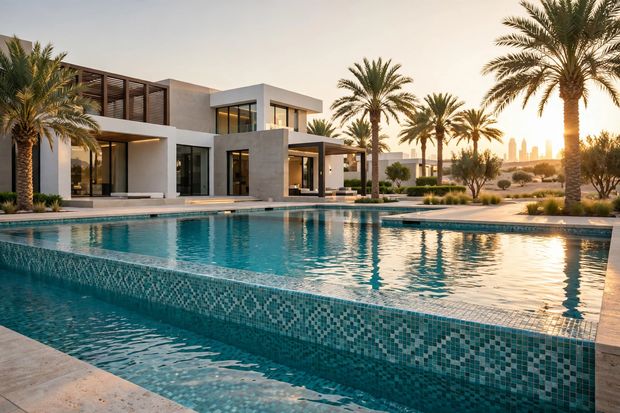


Choosing the Right Swimming Pool Tiles in Dubai
Walk past any villa pool in Dubai and the first thing you notice is the finish. The water looks turquoise, deep blue, or almost black. That colour comes from the tiles below it. Yet the tiles do far more than set the look. They protect the concrete shell and give swimmers grip on the steps. They also take daily punishment from sun, heat, chlorine, and hard water.
This guide covers the complete journey in one place. It shows how glass mosaic, porcelain, ceramic, pebble, and plaster finishes compare in Dubai heat. Next, it explains how tile colour changes the water you see. Coping and deck tiles get covered too, and they matter just as much as the tiles inside the pool. We also explain the hidden layers: waterproofing, adhesive, grout, and movement joints. Those layers decide how long any tile lasts.
The Short Answer: Which Tiles Suit Your Dubai Pool?
Most Dubai villa pools do best with glass mosaic or porcelain. Glass mosaic suits curved pools, steps, benches, and classic looks. Small tiles follow every curve without cutting. Porcelain suits large, straight-walled pools and modern villas. Bigger tiles mean fewer joints and a clean, calm surface. Both can last for many years in UAE heat, but only when the layers behind them are right.
The decision in one paragraph
Pick glass mosaic if your pool has curves, a freeform shape, lots of steps, or a tanning ledge. Porcelain is the better pick for a straight-edged, modern pool with fewer grout lines and simpler cleaning. For bright turquoise water, go pale or mid-blue. A dark tone works only if you accept warmer water and a mirror-like surface.
When glass mosaic wins
Glass mosaic wins where the pool shape is complex. Small tiles bend around curves, wrap steps, and cover benches without awkward cuts or wasted pieces. Many owners in Palm Jumeirah and Jumeirah choose mosaic for this classic resort look. It suits new builds too, and a full pool renovation where the old finish has reached the end of its life.
When porcelain wins
Porcelain wins where the pool is straight, modern, and easy to clean. Large-format tiles cover a wall in a few pieces, so the surface looks calm and the grout lines almost disappear. Porcelain also stands up to stains well, which helps in hard-water areas. A textured finish gives good grip on steps and floors. Our swimming pool design team often pairs porcelain with pale coping and a simple waterline band. The result is a modern Dubai villa look.
What Pool Tiles Actually Do — More Than Decoration
A pool tile is a working surface, not a picture. It seals the shell against water and stands up to chemicals day after day. It also gives feet a safe surface to stand on. In Dubai, it also faces heat that expands concrete. Sun fades weak colours. And hard water leaves mineral scale at the waterline.
Protection for the shell
The concrete shell holds the water, but it is not waterproof on its own. Tiles and grout form the visible barrier, while a membrane behind them does the real sealing work. If water gets past the tile layer, it can reach the shell. That can cause damp patches, stains, or loose tiles. That is why good tilers treat the whole system as one job. It is not a tile job plus a separate waterproofing job.
Grip, comfort and safety underfoot
Wet feet on a smooth tile can slip fast. So the finish on steps, ledges, and the shallow floor needs texture. Glass mosaic gives natural grip through its many small joints. Porcelain needs a textured or anti-slip surface to do the same job. Polished tiles belong on a wall or a dry deck edge, never on a step tread.
Why the finish is the last thing to choose, not the first
Many owners choose the tile first and then ask how to build around it. That order causes trouble. The pool shape, the water system, and the coping all affect which finishes will work. A saltwater system, a heater, or a pool chiller each place different demands on grout and trims. Decide the pool use first, confirm the systems, and then pick the finish that suits them.
Glass Mosaic Tiles: The Classic Dubai Pool Look
Glass mosaic is the finish most people picture when they think of a Dubai villa pool. Small squares of coloured glass, usually set on mesh sheets, cover the pool in a shimmering skin. The glass does not absorb water. It holds its colour well in sun. And it reflects light in a way that makes the water glow.
How glass mosaic works
Each mosaic tile is small, often about the size of a postage stamp. Many tiles arrive fixed to a mesh sheet for easy laying. The tiler spreads a pool-rated adhesive, presses the sheet into place, and then grouts the joints once the adhesive has set. Because the tiles are small, the sheet bends around curves and steps. The joints act as tiny movement gaps that help the finish cope with heat.
Where mosaic shines — curves, steps and benches
Freeform pools, kidney shapes, round spas, and curved steps all favour mosaic. Large tiles would need many cuts to follow those shapes. Each cut creates a weak edge and extra waste. Mosaic simply follows the curve. Benches, sun shelves, and swim-outs also look better in mosaic. The small tiles wrap the edges cleanly.
The grout trade-off: thousands of joints
Every mosaic joint is a place where water, chemicals, and scale can work. Epoxy grout stands up to that attack far better than cement grout. It keeps its colour longer in a chlorinated pool. Cement grout can work in a well-kept pool. But it needs more care, and it will show wear sooner at the waterline.
Porcelain Tiles: The Modern, Low-Joint Alternative
Porcelain tiles bring a calm, modern look to a pool. They come in large formats and hold their colour. They also stand up to stains and chemicals well. Many new villas in Dubai Hills Estate and Arabian Ranches choose porcelain for this clean look.
Textured vs polished — slip matters
A polished porcelain tile looks smart on a wall, but it can be slippery under wet feet. For floors, steps, and benches, choose a textured, matt, or anti-slip finish. Check its rating with the supplier first. The texture should feel grippy when wet, not just when dry.
Large formats and the modern villa look
Large porcelain tiles suit straight walls and straight-edged pools. They create long, clean lines and they make the water look deep and still. Your builder should level the base with care before tiling starts. That step is part of good swimming pool construction, not an extra you can skip.
Where large tiles cannot go
Large tiles cannot bend around tight curves, small steps, or round spa seats. If your pool has those features, use mosaic or a smaller porcelain format there. Keep large tiles for the long straight walls. A mixed finish can look intentional when the colours match. So plan the change at a natural line, such as the edge of a step or the start of a curve.
Ceramic Mosaic, Pebble and Plaster Finishes Compared
Not every pool needs glass or porcelain. Ceramic mosaic, pebble, and plaster finishes each have a place. Each suits a different budget, look, and level of care. The mistake is to choose one of these finishes without checking if it is rated for a pool. Our guide to types of swimming pools can help you match the finish to the pool type you have.
Ceramic mosaic — check the immersion rating
Ceramic mosaic looks much like glass mosaic, but the tile body is clay-based rather than glass. Good pool-grade ceramic works well and often costs less than glass. Yet the key word is pool-grade. The tile must have very low water absorption and a glaze made for life under water. If not, it will absorb water, stain, and crack over time.
Pebble and aggregate finishes
Pebble and stone finishes use small stones set in a cement or resin base. They create a natural, textured surface. Lagoon-style pools and natural gardens suit them best. Owners who want a softer, less tiled look will like them too. The texture gives good grip, and the mixed colours hide small marks well.
Plaster and marble render — honest limits
Plaster and marble render give a smooth, even pool interior with no joints at all. They look calm and they feel soft underfoot, which many swimmers love. The limit is care. Plaster is more sensitive to water chemistry than tile, so pH and chlorine need steady attention. If water care slips, plaster can stain or etch. So this finish suits owners who keep up with swimming pool maintenance or use a regular service.
How Tile Colour Changes Your Water
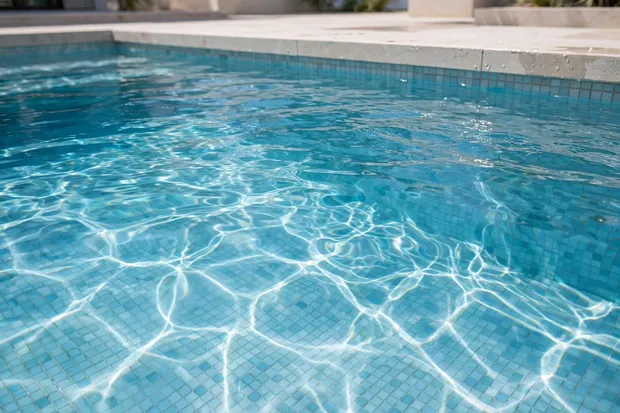
Water has no colour of its own in a pool. The colour you see comes from the sky, the light, and the tiles below the surface. A pale tile reflects light back through the water. It makes the water look bright turquoise. A dark tile absorbs light and makes the water look deep, still, and almost black.
Pale tiles and the turquoise look
Pale blue, pale green, white, and sand tones give the classic turquoise water that most Dubai owners want. Light bounces off the pale floor. So the pool looks bright, clean, and inviting, even on a cloudy day. Pale tiles also show the pool floor clearly. That helps you spot leaves or dirt early.
Mid blues and greens — the lagoon tone
Mid blues, aqua, and soft greens give a lagoon tone that feels natural and calm. The water looks deeper than it does over pale tiles. But it still feels bright and fresh. This range hides small marks better than pale tiles. It suits gardens with lots of green planting.
Dark tiles — mirror water that runs warmer
Dark blue, charcoal, and black tiles create a mirror surface that reflects the sky, the villa, and the garden. The effect is striking, and it suits modern architecture very well. Dark tiles also absorb more heat from the sun. So the water can feel warmer. Some owners love that in winter, while others find it too warm in peak summer.
Coping and Deck Tiles: The Edge That Takes the Heat
Coping is the edge that caps the pool wall, and the deck is the surface around it. Together they take more heat, more foot traffic, and more water splash than any other part of the pool. In Dubai, bare feet meet that edge on a hot afternoon. The material must stay cool enough to walk on. It must also stay grippy enough to stand on when wet.
Coping materials compared
Natural stone, porcelain, and precast concrete are the common coping choices in Dubai. Stone looks warm and natural, and it suits classic villas. But it needs sealing, and it can vary in colour from piece to piece. Porcelain coping matches a porcelain pool finish and gives a clean, even edge with low upkeep. Precast coping suits modern pools and can be made in long, even lengths.
Staying cool underfoot — SRI and light colours
The Solar Reflectance Index, or SRI, measures how well a surface reflects heat. A higher SRI means a cooler surface in the sun. A value of 78 or above is a good guide for coping and deck areas that take bare feet. Light colours help too, because they reflect more sun than dark colours. In practice, a pale stone or porcelain edge will feel far kinder at midday than a dark one. That holds even when both sit in the same sun.
Bullnose vs eased edges
A bullnose edge is fully rounded. So it feels soft under hands and feet, and it is kind to swimmers who grip the edge. An eased edge has a small, soft chamfer rather than a full round. It looks sharper and more modern, while still avoiding a harsh corner. Bullnose suits family pools and classic designs. Eased edges suit modern villas with clean lines.
Slip ratings — DIN 51097 classes B and C
Slip ratings for wet barefoot areas use the DIN 51097 test, which grades surfaces from A to C. Class B suits pool decks and general wet areas. Class C suits coping, steps, and other places where feet are wet and the surface slopes. When you choose coping or deck tiles, ask for the DIN 51097 class. Pick class C for the coping and steps.
What Sits Behind the Tile: Waterproofing, Adhesive and Grout
Ask a pool tiler what decides the life of a tile job and most will point behind the tile, not at it. The tile is the face you see, but waterproofing, adhesive, and grout do the work that keeps it in place. In Dubai heat, concrete expands and contracts. Water pushes against every joint, and chemicals test every bond. Ask your contractor to show you each layer before the next one goes on. That is part of sound swimming pool construction.
Waterproofing is the real waterproof layer
Tiles and grout slow water down, but they do not waterproof a pool on their own. The membrane behind them is the real waterproof layer. It must cover the shell without gaps, pinholes, or weak joints. It needs time to cure, so test it before tiling starts. A leak found after tiling means draining the pool and starting again.
Pool-rated adhesive and bond coat
Ordinary tile adhesive is made for dry rooms and light use. Pool adhesive must bond under constant water. It must stand up to chemicals and cope with heat movement without letting go. A bond coat, sometimes called a slurry coat, helps the adhesive grip the waterproofing layer and the tile.
Epoxy grout vs cement grout
Cement grout is the classic choice. It works well in a pool that is kept clean and balanced. The epoxy type is tougher and stands up to chemicals and stains. It holds its colour far longer at the waterline. It is harder to apply and needs a skilled hand. But for a Dubai pool with hard water and strong sun, it is often the better long-term choice.
Movement joints — where concrete moves in the heat
Concrete moves as it heats in the day and cools at night. A pool without movement joints will crack somewhere. Movement joints are flexible gaps, filled with a sealant, that let the structure move without pushing tiles off the wall. They belong at corners, at the coping joint, around fittings, and at regular intervals along long walls.
The Waterline Band and Dubai’s Hard Water
The waterline is the hardest-working band in any pool. It sits half in water and half in air, taking sun, splash, sunscreen, and body oils. It meets Dubai’s hard water every day. That is why the waterline ages first, even when the pool floor still looks new. Regular brushing during swimming pool cleaning will slow the wear and keep the band looking sharp.
Why the waterline ages fastest
At the waterline, water dries and leaves minerals behind. The tile above the line dries in the sun, while the tile below stays wet. That daily wet-dry cycle stresses grout and adhesive more than any other part of the pool. Sunscreen, oils, and dust also collect there. So the band needs a tile that stands up to stains and a grout that does not soak them up.
Scale lines — what causes them
Dubai tap water carries dissolved minerals, mainly calcium. When pool water dries at the surface, those minerals stay behind as a pale, crusty line. The line is not dirt, so scrubbing with a normal brush often will not shift it. Harsh scraping can damage the tile or grout. Balanced water helps. Keep pH in its usual target range and brush the waterline weekly, so minerals do not build up into a thick crust.
A contrasting waterline tile that hides scale
One smart design choice is a waterline band in a colour that hides scale. A mid-blue, teal, or patterned mosaic band shows a faint mineral line far less than a plain white or pale band. It also looks good, because it frames the water and marks the level clearly for swimmers.
Saltwater Pools and Tile Choice
Saltwater pools feel softer on the skin. They need less handling of chlorine, which is why many Dubai owners choose them. The salt level is low, far below sea water, but it is still enough to affect some materials over time. If you are weighing the change, read our guide to saltwater vs chlorine pools in Dubai before you decide.
Which finishes suit a saltwater system
Glass mosaic and porcelain are the safest choices for a saltwater pool. Neither absorbs salt water, and both stand up to chemical attack. Pebble finishes can also work if they are sealed well, but they need more care around the waterline. Plaster needs steady water care in any pool, and salt water does not change that rule.
Grout and metal trims in salt water
Grout is the weak point in a saltwater pool, so epoxy grout is worth the upgrade here. It stands up to salt and keeps its colour. It does not soften the way cement grout can. Metal trims need care too. Choose marine-grade steel or a finish that stands up to salt. Avoid plain steel or cheap aluminium trims that will pit and stain.
What to check before converting
Before you convert a chlorine pool to salt water, check the tiles, grout, coping, and any metal in or near the pool. Look for loose tiles, soft grout, or stained trims, and fix those first. Salt water will find any weak spot. Check the pump, heater, and lights too, since some older parts are not rated for salt.
Retiling an Existing Pool: The Process Step by Step
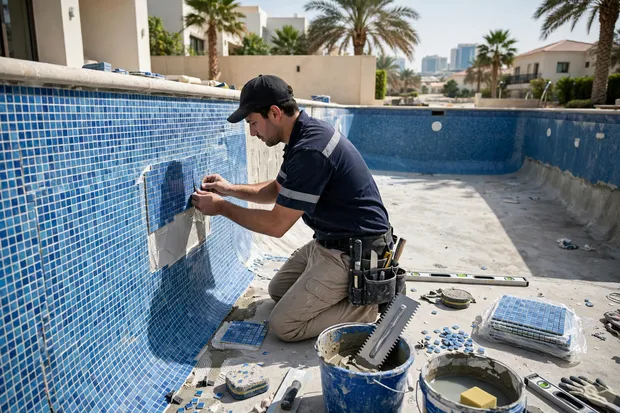
Retiling is one of the most rewarding upgrades you can make to an older pool. A fresh finish changes the whole look of the garden and fixes loose tiles and worn grout. It also gives you a chance to put right the hidden layers that failed the first time. It is also a bigger job than many owners expect. The old tiles must come off first. Then the shell must be checked, and each layer must cure before the next one goes on.
When retiling is the right call
Retiling is the right call when tiles are loose across large areas. The same goes for missing or crumbling grout. It also applies to a waterline band stained beyond cleaning. The finish may also no longer match the villa after a garden upgrade. A pool leak is another good time, if the cause sits in the tile system rather than the pipes. For a wider view of what a renovation can include, see our guide to swimming pool renovation in Dubai. Our fiberglass vs concrete pool comparison helps too.
The fixed order — shell, waterproofing, substrate, tile, grout, cure
The order is simple and it must not change. First, the old tiles and grout come off and the shell is repaired. That fixes cracks and hollow spots. Next, waterproofing goes on and is tested. This is the last chance to find a leak easily. Then the base is levelled, so the new tiles sit flat and true. After that, the bond coat and tiles go on, then the grout. Finally, the pool cures before filling.
Full retile vs waterline-only
A full retile replaces every tile in the pool. It suits pools where the finish has failed in many places, or where you want a new colour throughout. A waterline-only retile replaces just the band at the water level. It suits pools where the floor and walls are sound but the band is worn or stained. Waterline work is faster, and it keeps the pool empty for less time. But it only works if the old tiles below the band are still firmly bonded.
How long your pool stays empty
How long the pool stays empty depends on the size of the job. It also depends on the weather and the cure times of the products used. A waterline retile may take days, while a full retile takes longer. Each layer needs time to set before the next one starts. Hot weather can speed some cures and slow others, so the schedule should follow the product data, not a fixed number of days.
Keeping Tiles Looking New: Cleaning and Care
Good tiles stay looking new when the water stays balanced and the surface gets regular care. The work is small and steady: brush the walls, clean the waterline, and keep the chemistry in its usual range. That routine protects grout and stops scale from building up. It keeps the water clear enough to show off the tile colour you chose. If you would rather hand the routine to a team, our swimming pool maintenance guide explains what a regular service covers.
Weekly habits that protect grout
Brush the waterline and the steps once a week with a soft brush made for your tile type. Use a tile cleaner made for pools, not a household cleaner that can leave a film. Keep pH in its usual target range of 7.2–7.6 and free chlorine at 1–3 ppm. Balanced water is gentler on grout and plaster. It beats water that swings from one extreme to the other.
Removing scale without damaging the finish
Scale is a mineral deposit, so it needs a cleaner made for scale, not a metal scraper or a harsh pad. Apply the cleaner as the label directs and let it work. Then wipe with a soft cloth or a non-scratch pad. Never use a steel brush on glass mosaic or glazed tile, because it will scratch the glaze and leave marks that show in the sun.
When to call a professional
Call a professional when tiles are loose or grout is missing in long runs. The waterline band stained through is another sign. So is a pool that loses water with no clear cause. Those signs point to a problem behind the tile, not just on its surface. A home clean will not fix them.
Which Tiles Should You Choose? A Simple Decision Guide
By now you have the full picture, so the choice should feel simpler. Start with the pool shape, then the household, then the look. Curved family pools with steps and a sun shelf point to glass mosaic. Straight, modern pools with clean lines point to porcelain. And a natural garden pool points to pebble or a soft plaster tone.
Match the finish to your pool and household
Families with young children should favour grip and pale, bright water that shows the floor clearly. Owners who swim at night should favour a finish that looks good under pool lights. Dark tiles can look almost black after sunset. Owners in Emirates Hills with large gardens may want a finish that links the pool to the landscape. A compact villa garden may suit a single calm tone that makes the space feel larger.
Your next step — a free site visit
The best way to choose tiles is to see them in your pool, not in a showroom. On a free site visit, we look at your pool shape, your coping, your waterline, and the condition of the old finish. We bring samples you can hold against the water in daylight. We will talk through glass mosaic, porcelain, and the hidden layers. Then we will give you a clear plan for a new build or a retile. You can also read our guides to swimming pool design in Dubai, pool permits in Dubai, and swimming pool costs in Dubai before we visit. That way you arrive with good questions.
Frequently asked questions
Choosing tiles and colours
What are the best swimming pool tiles for Dubai heat?
Glass mosaic and porcelain both cope well with Dubai heat. They must be rated for pool use under water and laid on a sound system. Glass mosaic suits curved pools and steps, while porcelain suits straight modern pools with fewer joints.
How does tile colour change the colour of pool water?
Water has no colour of its own, so the tile below it sets the tone you see. Pale tiles reflect light and make the water look bright turquoise. Mid blues and greens give a calm lagoon tone. Dark tiles absorb light and make the water look deep and mirror-like.
Are glass mosaic pool tiles good for a villa pool?
Yes, glass mosaic is a strong choice for a villa pool with curves, steps, benches, or a sun shelf. The small tiles follow every shape. The glass holds its colour in sun, and small repairs are simple when a few tiles loosen.
What is pool coping, and why does it matter?
Coping is the edge that caps the pool wall and joins it to the deck. It protects the joint below it and sheds water away from the shell. It gives swimmers a safe edge to grip.
Can I use porcelain tiles in a swimming pool?
Yes, if the porcelain tile is made for pools and has a textured or anti-slip finish for floors and steps. Large-format porcelain gives a clean modern look with few grout lines. But it needs a flat, level base, and it cannot bend around tight curves.
Retiling, care and repairs
How do I stop scale lines at the waterline in Dubai?
Brush the waterline weekly and keep pH in its usual target range of 7.2–7.6. Wipe the band during regular cleaning so minerals do not build up. A mid-tone or patterned waterline tile also hides a faint scale line far better than a plain pale band.
Is epoxy grout better than cement grout for pools?
Epoxy grout is tougher. It stands up to chemicals and stains. It holds its colour longer, mainly at the waterline and in saltwater pools. Cement grout can work in a well-kept pool. But it needs more care, and it shows wear sooner. For a Dubai pool, epoxy grout is often the best single upgrade in the tile system.
Retile scope, saltwater tiles and timing
Can I retile just the waterline, or does the whole pool need retiling?
You can retile just the waterline if the tiles below the band are still firmly bonded. The waterproofing behind them must be sound too. A tap-test will show whether the old tiles are hollow or loose. If tiles are loose across large areas, a full retile is the honest answer. The same goes when the finish has failed in many places.
Are pool tiles safe for saltwater pools?
Yes, glass mosaic, porcelain, and glazed ceramic all suit saltwater pools when they are rated for saltwater use. Epoxy grout is the best choice here. Metal trims should be marine-grade steel or a finish that stands up to salt. Before converting, check the tiles, grout, coping, and fittings for any weak spots. Salt water will find them.
How long does a pool retile take?
It depends on the size of the pool and whether you need a full retile or a waterline-only job. Each layer needs its full time before the next step starts. The layers are shell repair, waterproofing, base levelling, tiling, grouting, and curing. The pool stays empty until the cure is complete.